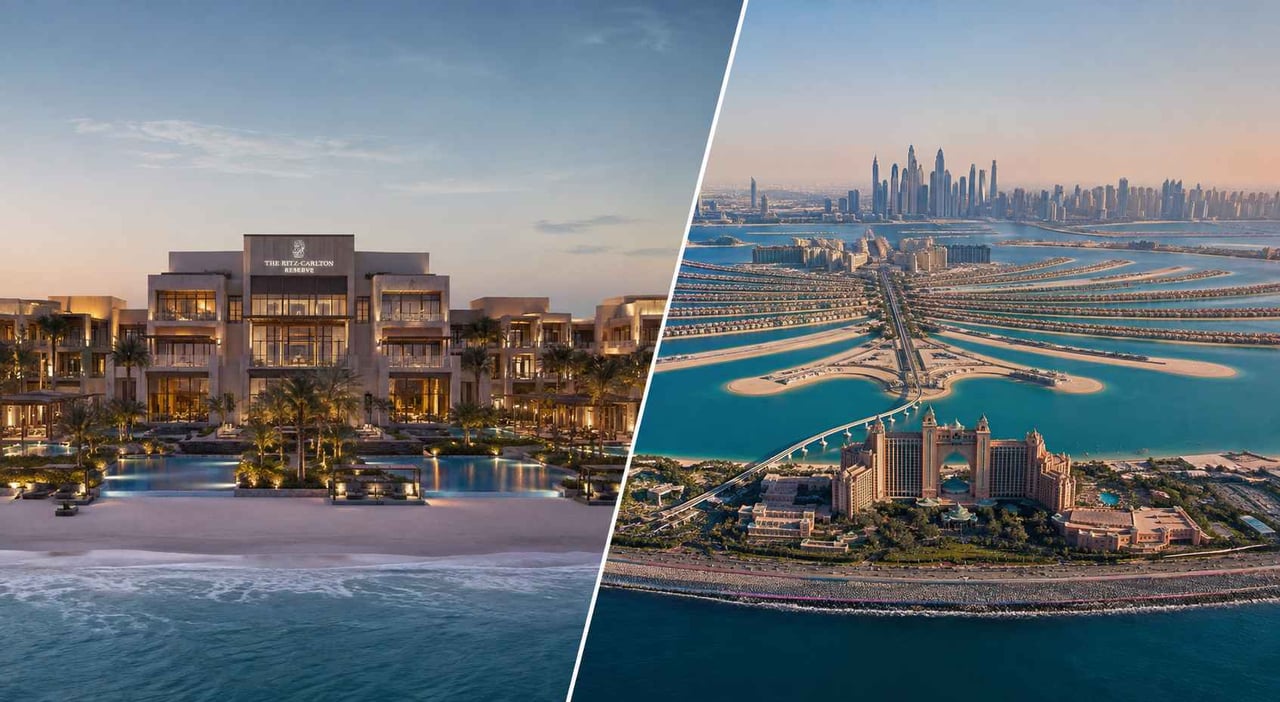
Puerto Rico's luxury segment enters 2026 with sustained upward pressure on the $1 million-plus band and Dorado Beach pricing that now benchmarks against Dubai's premier freehold addresses rather than domestic US coastal markets, a shift consistent with the trend Knight Frank tracks in its annual Prime International Residential Index. That price point puts Dorado in conversation with Palm Jumeirah, not with Miami Beach or Aspen, and that shift in comparison set is new.
Over 13 years of closing deals from Old San Juan to Bahía Beach, Brian Aronson, founder and CEO of Christie's International Real Estate Puerto Rico, has watched buyers walk into showings with spreadsheets comparing Dorado against Dubai's Palm Islands rather than against domestic US coastal markets. This piece benchmarks Puerto Rico against Dubai, and by extension Miami and Cayman, using Act 60 filings, Knight Frank data, and the conversations happening right now in HNW forums.
Key Takeaways
Act 60's 2027 4% flat tax still beats Dubai's zero-tax pitch for US citizens.
Dorado Beach now prices in the low-to-mid $800s per sq ft, rivaling Palm Jumeirah.
Puerto Rico's luxury inventory sits at just 3-6 months of supply.
US title and federal courts give Puerto Rico an edge over Dubai's freehold limits.
A 4-hour, passport-free flight beats Dubai's 13-14 hour journey for East Coast buyers.
Act 60's 2026 Shift to a 4% Flat Tax Still Outperforms Dubai's Zero-Tax Headline

Act 60's Individual Resident Investor decree moves from 0% to a 4% flat tax on Puerto Rico-sourced dividends, interest, and post-residency capital gains for applications filed on or after January 1, 2027, under Act 38-2026, which Governor Jenniffer González signed on March 10, 2026. Decrees granted from applications filed on or before December 31, 2026 retain the current 0% structure through December 31, 2035, and the program's overall horizon has been extended from 2035 to 2055. That 4% still beats what most Dubai-bound US citizens actually pay once you factor in that Dubai's zero-income-tax headline does not touch US federal tax exposure for American passport holders.
Discussions in communities on Act 60 relocations keep circling this exact point: Dubai's tax pitch reads cleaner on a slide, but it solves a problem US citizens don't fully have unless they renounce citizenship, which almost none of the buyers in the $5M-$25M net worth band are willing to do. That distinction comes up constantly at Dorado closings, where crypto founders and fund managers assumed Dubai's tax-free label solved everything, then realized they remained US taxpayers regardless of where they parked a passport. Practitioners working on Act 60 filings routinely make the same point: even the new 4% preferential rate on PR-sourced passive income remains materially below the effective rates most HNW US taxpayers face on the mainland, and unlike Dubai's zero-tax pitch, it applies to a resident who has not had to renounce US citizenship.
Dorado Beach Price Per Square Foot Now Competes With Palm Jumeirah, Not Miami Beach
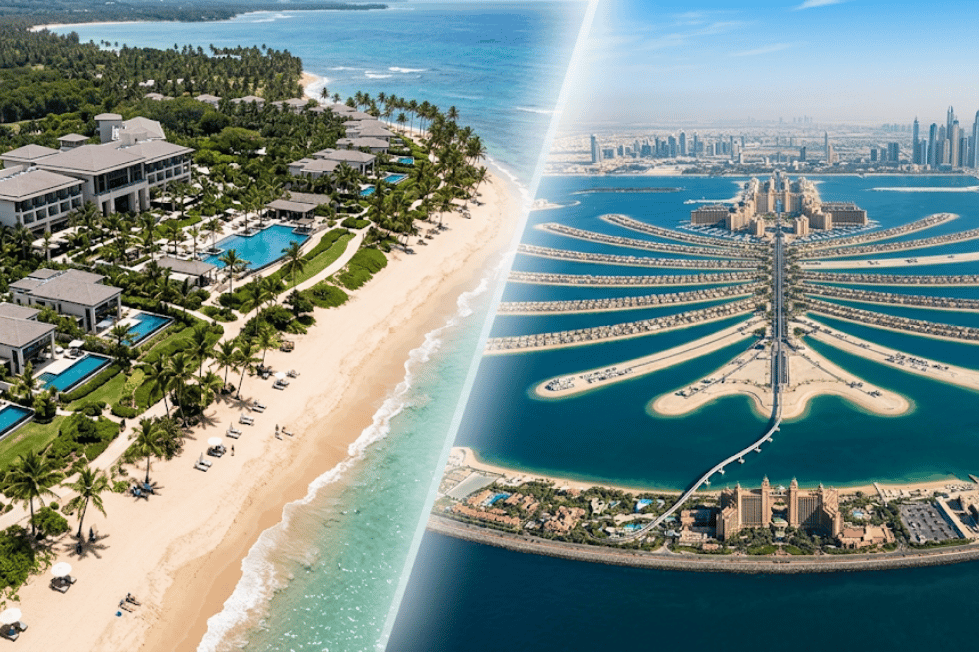
Dorado Beach's early-2026 pricing sits in the low-to-mid $800s per square foot, a figure that now sits closer to Dubai's premier freehold addresses than to South Florida, based on recent reporting compiled by InvestatePR. That repricing didn't happen overnight. Dorado's Beach Club and East neighborhoods have shown sustained appreciation through the 2024–2025 period, tracking a broader pattern captured in the Knight Frank Prime International Residential Index. Dubai freehold product — particularly in Dubai Marina and Palm Jumeirah — is now a common comparison point among prospective buyers touring these homes.
The comparison isn't cosmetic. Buyers who invest in Dubai property get newer finishes and faster construction timelines, but Dorado offers something Dubai's newest towers can't: established beachfront lots with 20-plus years of resale history and appreciation data attached. That track record matters to buyers structuring eight-figure purchases through funds rather than personal names, since underwriting a newer, less-tested market carries a different risk profile entirely.
Puerto Rico's 3-to-6-Month Inventory Squeeze vs Dubai's Endless New-Tower Pipeline
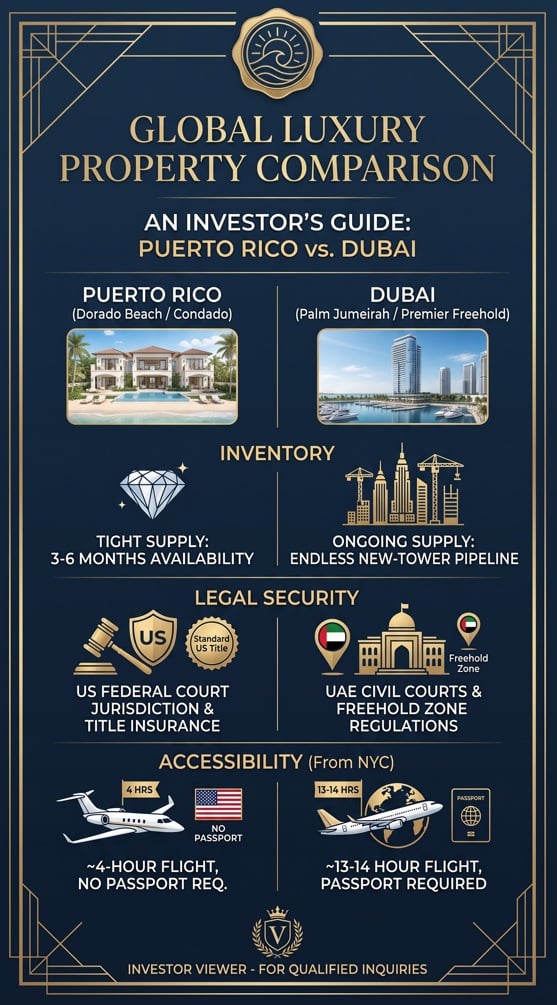
Puerto Rico's $1 million-plus segment carries roughly 3 to 6 months of available inventory heading into 2026, with only around 420 new construction units expected island-wide for the year, according to InvestatePR's outlook. Dubai, by contrast, keeps adding supply through the Dubai Land Department's ongoing freehold releases, which means Dubai buyers rarely face the same bidding pressure that's become routine in Dorado and Palmas del Mar.
That structural gap shows up directly in negotiations. Days-on-market for well-priced Bahía Beach listings has compressed materially versus the pre-pandemic period. Sellers who price to current comps generally see meaningfully faster absorption than they would have in 2019, consistent with the broader post-2020 tightening in Puerto Rico's luxury segment. The table below lines up the three markets buyers keep asking about side by side.
US Legal Title Beats Dubai Freehold for Fund Managers Structuring $10M-Plus Deals

Puerto Rico offers full US title insurance, US federal court jurisdiction, and no restrictions on foreign or mainland US ownership, a structure fund managers underwriting eight-figure deals treat as non-negotiable. Dubai's freehold ownership is available only to foreign buyers within designated freehold zones defined by the Dubai Land Department, and property disputes route through UAE civil courts and the Dubai Courts system, which US-based counsel typically does not practice in directly.
What Fund Managers Actually Ask About
Whether title insurance is available at US standards (yes in PR, more limited in Dubai freehold zones)
Whether US bank financing applies (yes in PR, largely no in Dubai without local banking relationships)
Whether a dispute resolves in a court their counsel already practices in (PR yes, Dubai requires local representation)
For fund-structured buyers underwriting eight-figure deals, legal predictability — US title insurance, US federal court jurisdiction, and US counsel familiarity — frequently outweighs Dubai's marginal tax-rate advantage. The American Land Title Association's standard title insurance framework applies in Puerto Rico as in any US jurisdiction, which is not the case in Dubai's freehold zones.
The Four-Hour Flight Advantage: Why East Coast Money Picks Condado Over the Gulf
A four-hour flight from JFK to San Juan, with no passport required for US citizens, makes Puerto Rico functionally closer than most people expect for buyers who need to satisfy Act 60's 183-day presence test without abandoning a New York or Boston-based business. Dubai requires roughly 13 to 14 hours in the air and a passport, which changes the calculus entirely for anyone splitting time between a mainland business and a second residence.
Threads in r/expats comparing Act 60 relocations to Dubai residency programs consistently raise this exact trade-off: Dubai suits founders building Asia or Europe-facing businesses who value direct flight access to those regions, while Puerto Rico suits anyone still running board meetings or client relationships on the US East Coast. The four-hour flight advantage is a recurring theme in East Coast buyer decisions between Condado and comparable Dubai product, particularly for buyers who continue running board or client relationships from Manhattan or Boston. San Juan is served by direct daily flights from JFK, Newark, Boston, and other major East Coast hubs, with no passport required for US citizens.
Hurricane Season vs Desert Heat: The Climate Trade-off No One Puts in the Brochure

Puerto Rico's luxury coastline carries hurricane exposure during the Atlantic hurricane season, which runs June 1 through November 30 as tracked by the NOAA National Hurricane Center. Money doesn't eliminate either risk, and both markets have adapted construction standards accordingly.
New construction in Dorado Beach and Bahía Beach reflects the updated wind-load and impact-glazing standards adopted across Puerto Rico following the 2017 hurricane season, when the Puerto Rico Planning Board and Permits Management Office moved to the current International Building Code adoption.
Insurance premiums in PR's beachfront zones have risen, a cost to model before closing, not after
Dubai's desert heat drives higher year-round cooling costs and limits outdoor-oriented lifestyle months compared to PR's Caribbean climate
For older beachfront stock, roof anchoring and impact-rated glazing are typically the two items that most separate storm-hardened homes from legacy vulnerabilities — worth prioritizing in any pre-purchase inspection performed by an InterNACHI- or ASHI-credentialed inspector familiar with Caribbean coastal exposure.
Rental Yields in Dorado and Bahía Beach Outperform Most Global Luxury Peers
Puerto Rico's luxury segment has drawn increasing attention for rental yields that compare favorably to Miami and remain competitive with Dubai on a gross basis, a pattern reflected in Knight Frank's global prime rental tracking. Dubai's yields remain competitive on a gross basis, but Miami's luxury segment trails both once carrying costs and property taxes are included.
That yield advantage already shapes how buyers structure purchases now. Several Dorado and Palmas del Mar closings this past year involved buyers explicitly modeling short-term rental income against a Dubai freehold alternative before choosing PR, citing the combination of yield and US legal protections as the deciding factor.
Conclusion
Puerto Rico's luxury market has outgrown its old comparison set of Miami and Aspen, now trading in the same conversation as Dubai's premier freehold zones on price, yield, and buyer sophistication. What still separates Dorado, Condado, and Bahía Beach from Dubai isn't finish quality or tax headlines, it's the combination of US title security, federal court jurisdiction, and a four-hour flight that keeps East Coast wealth close to home. As Act 60's 2027 shift to a 4% flat tax approaches, the window for buyers to lock in the current structure while inventory stays tight is narrowing fast.
Ready to buy, sell, or rent luxury properties in Puerto Rico? Brian Aronson and Christie's International Real Estate Puerto Rico bring 13 years of closed deals across Dorado, Condado, and Old San Juan. Reach out before the Act 60 filing deadline to lock in the current tax structure.
FAQs
Does Act 60 require buying property in Puerto Rico to qualify?
No. Act 60 is a tax residency program; real estate ownership isn’t required, but you must meet the residency and compliance rules (including the 183-day presence test and ongoing filings) with qualified tax counsel.
What should buyers ask for in due diligence on older beachfront homes?
Request documentation on roof age/anchoring, impact-rated openings, generator and water systems, HOA reserves/special assessments, and a recent windstorm/hurricane insurance quote before finalizing your offer.
How liquid is the $1M+ market if you need to resell quickly?
Liquidity is highly property-specific: homes that are turnkey, well-priced, and in the most demanded neighborhoods tend to move fastest, while unique layouts, deferred maintenance, or aggressive pricing can extend timelines even in a tighter-supply market.