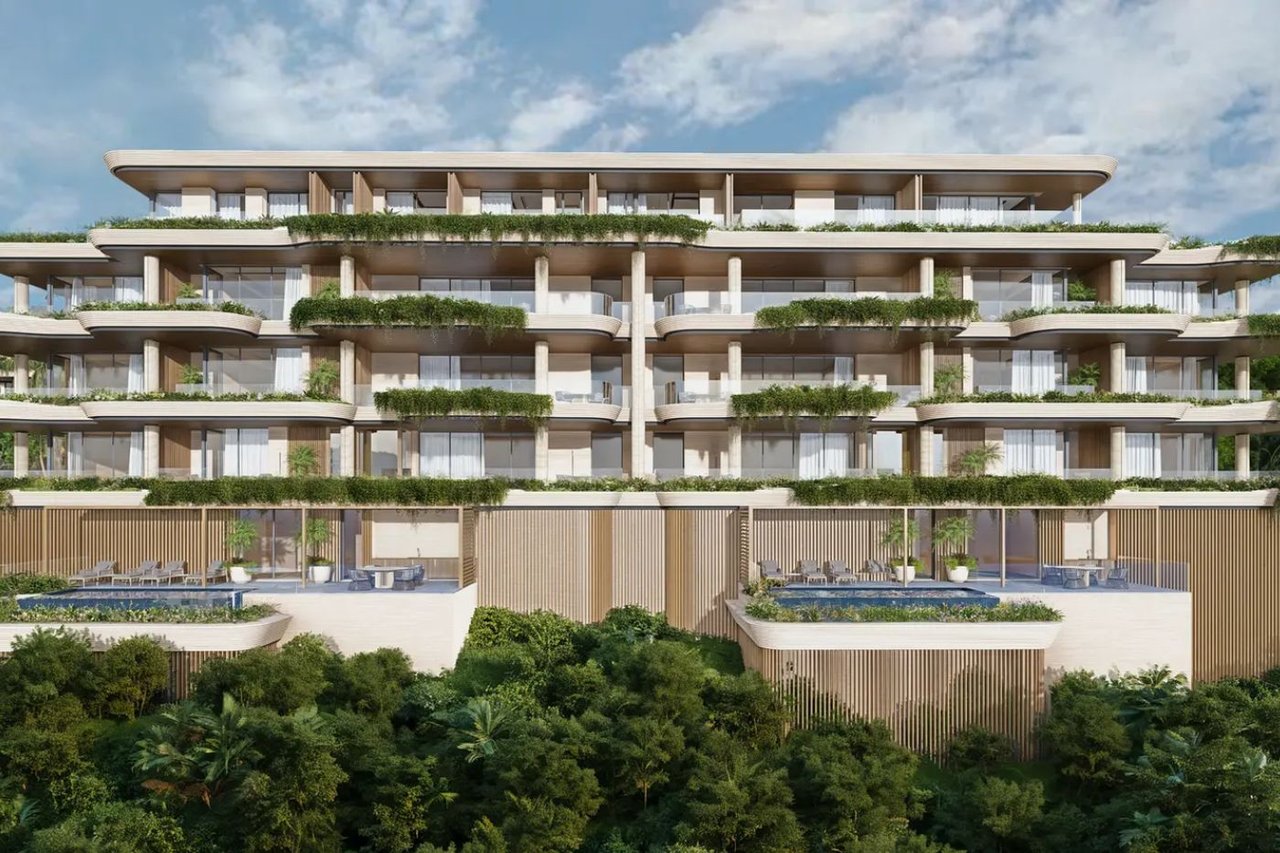
Buyers arriving in Puerto Rico from the mainland to purchase luxury homes bring a mental checklist that has served them well for decades. Square footage, finishes, views, the age of the systems, and comparable sales. It is a good checklist and it transfers almost entirely to Puerto Rico luxury real estate.
The one item that does not transfer is the roof, and it is the item where a mainland instinct is most likely to be exactly wrong. A roof that would signal quality in Connecticut can be a liability here, and a roof that looks austere to a mainland eye may be the single best thing about the building.
At Christie’s International Real Estate Puerto Rico, many of our clients are relocating from the mainland and evaluating properties in areas like San Juan, Dorado, and beachfront communities. Helping them read the roof correctly—within the island’s construction traditions and hurricane history—is a key part of buying with confidence.
Key Takeaways
Mainland roof instincts misread Puerto Rico’s concrete roofs and storm-focused design.
U.S. roofs are made of shingles; Caribbean roofs are reinforced concrete to withstand hurricanes.
Concrete roofs fail due to hidden rebar corrosion and aging of waterproofing.
Salt air quickly corrodes rooftop metal, signaling maintenance issues early.
Roof design, storm history, and insurance terms together define real property risk.
Two Different Engineering Problems
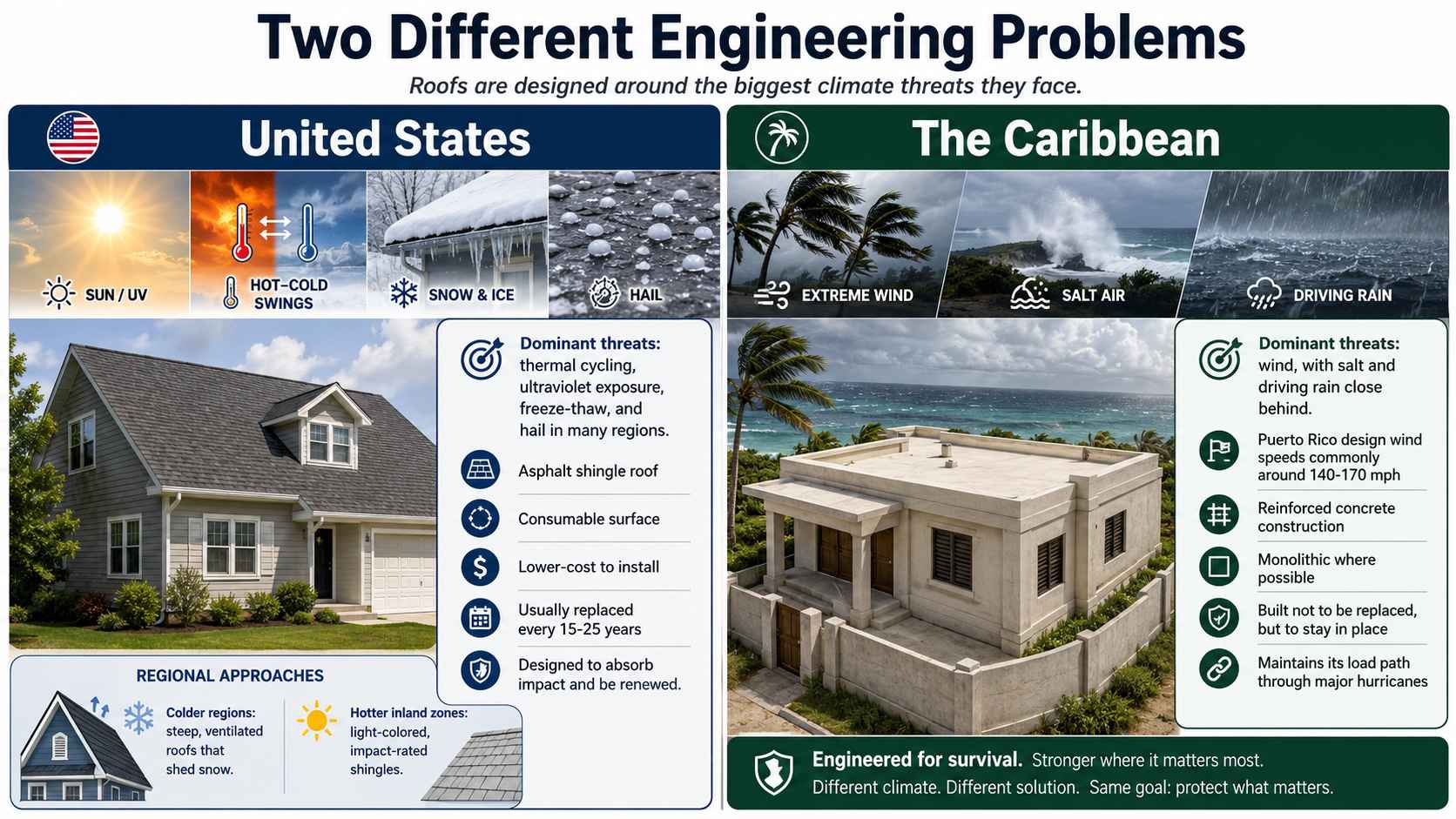
Roofs solve for whatever their climate throws hardest, and different climates throw very different things.
In the United States
In most of the continental United States, the dominant threats are:
Thermal cycling
Ultraviolet exposure
Freeze and thaw, and
In wide parts of the country, hail
That produces the asphalt shingle: a consumable surface, cheap to install, expected to be replaced every fifteen to twenty-five years, designed to absorb impact and be renewed.
In colder regions, that same logic produces steep, ventilated roofs that shed snow;
In hotter inland zones, it produces light-colored, impact-rated shingles designed around insurance claims rather than structural permanence.
In The Caribbean
In the Caribbean, the dominant threat is wind, with salt and driving rain close behind. Design wind speeds in Puerto Rico commonly range from around 140 to 170 mph for typical residential risk categories, so construction shifts to reinforced concrete, monolithic where possible, designed not to be replaced but to stay where it is and keep its load path intact through major hurricanes.
The Same Buyer, Two Vocabularies
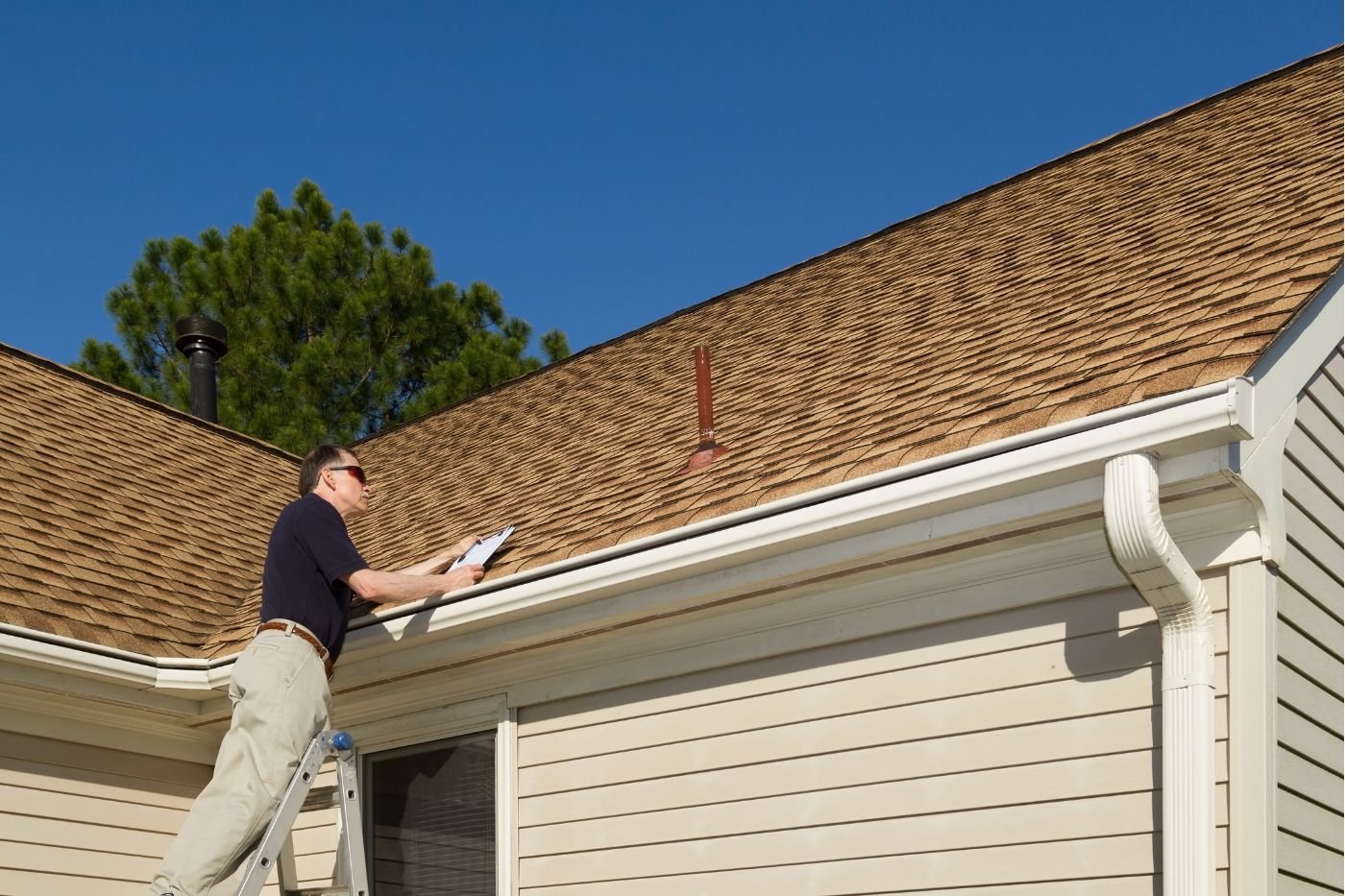
This is the reason a relocating buyer's questions often land oddly with a local inspector.
Someone who owns a home in Central Texas is fluent in a specific dialect. Their conversation with a firm like Round Rock Roofing Company—used here purely as an example from a different market—is about impact resistance ratings, hail claim timelines, and how quickly a crew can get on the roof after a storm, because in that market, the roof is a periodically claimed and replaced component with an insurance relationship attached.
Bring that vocabulary to a San Juan or Dorado purchase and it does not fit. Nobody here is discussing the shingle's impact class, because there is no shingle. The questions that matter are about:
The integrity of the concrete
The condition of the waterproofing membrane above it, whether reinforcement is corroding, and
How the roof is tied to the walls.
Neither buyer is wrong. They are simply fluent in different building traditions, and the transition costs money when it goes unnoticed.
What Actually Goes Wrong With a Concrete Roof
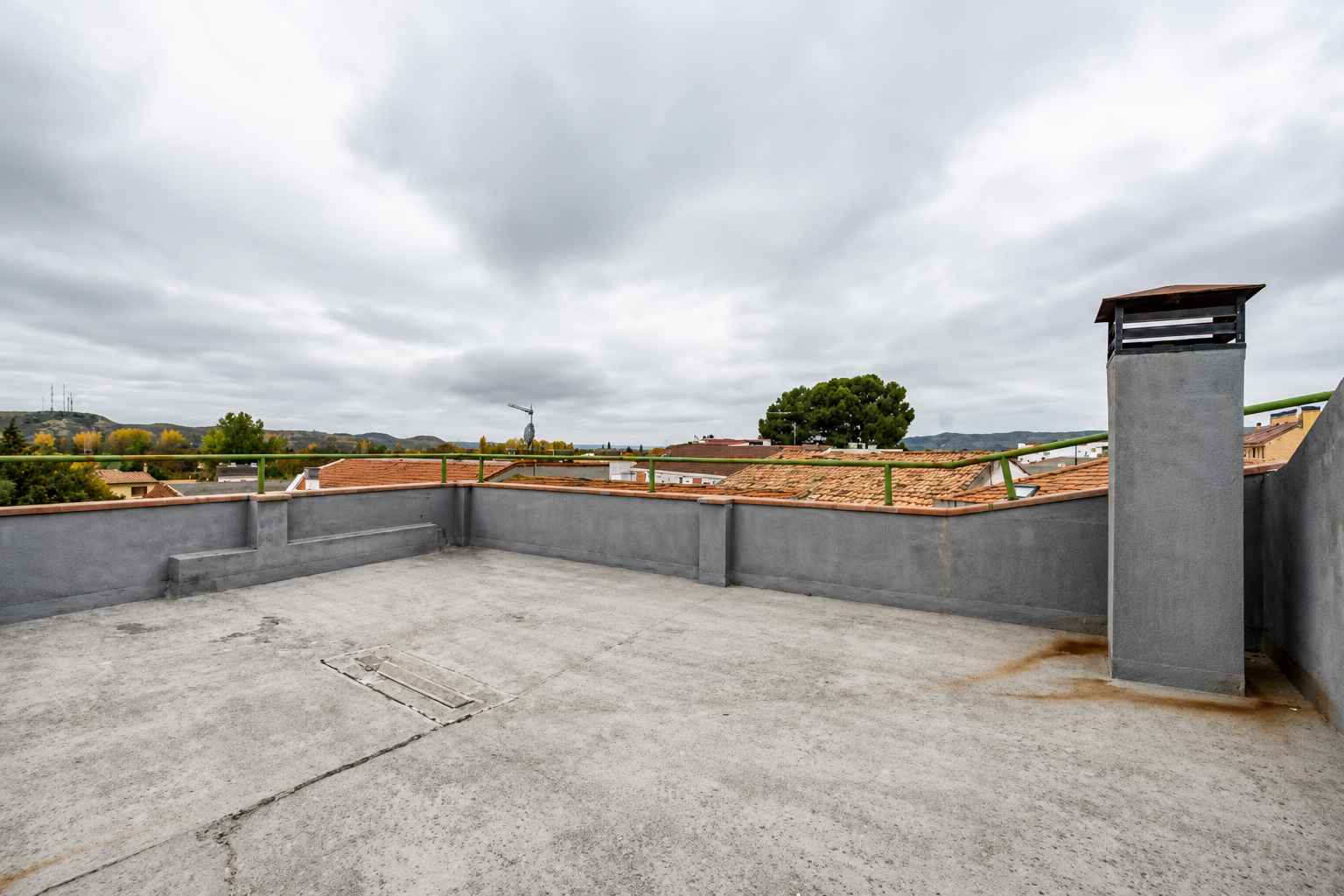
Concrete does not fail the way shingles fail, which is why mainland buyers often misread its condition entirely.
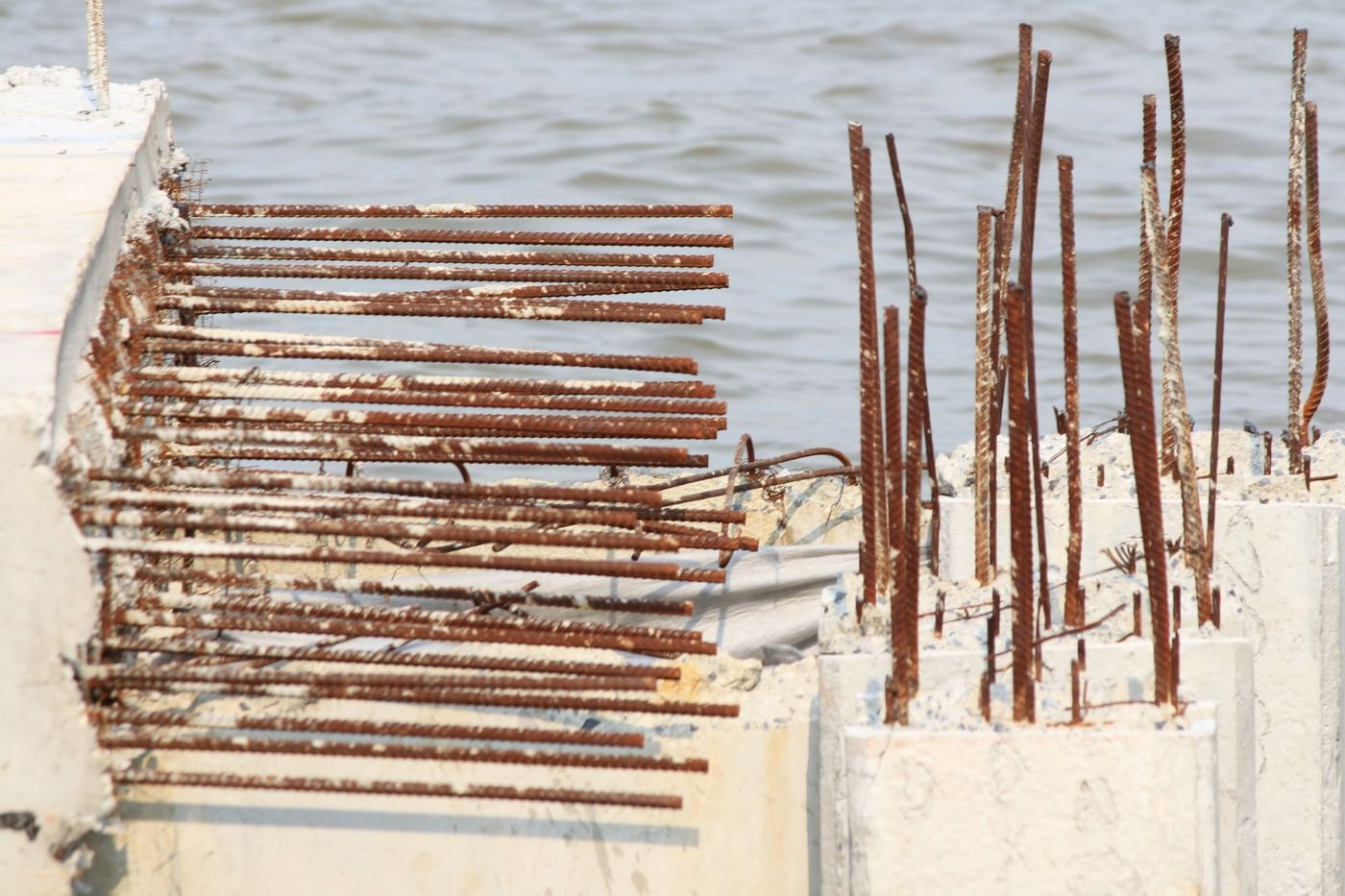
The characteristic problem is water reaching the reinforcing steel. Salt air accelerates it, and once the rebar corrodes, it expands, cracking the concrete from the inside and allowing more water in. The visible symptoms are rust staining, spalling where a patch of surface has broken away, and hairline cracking in patterns that follow the bars beneath.
The second problem is the waterproofing layer. A concrete roof is not waterproof on its own; it depends on a membrane or coating above it, and those have service lives measured in years rather than decades. A roof that has been recoated on schedule and a roof that has not can look identical from the driveway.
What the Federal Record Shows

There is a substantial public evidence base here, which is unusual and worth using.
After Hurricanes Irma and María, FEMA deployed a Mitigation Assessment Team to Puerto Rico to evaluate how buildings performed and to publish technical guidance based on its findings. The resulting recovery advisories for the island are revealing simply in their subject matter: one of the central topics is repairing and replacing roof coverings over wood-framed homes, alongside protecting windows and other openings.
FEMA's own documentation of the rebuilding also tells the story plainly. In one case study from Isabela, a homeowner who lost a wood-framed house to María in 2017 rebuilt in concrete, following codes and using appropriate materials, and describes the outcome as finally having a concrete roof over her head.
For a buyer, the useful takeaway is not that concrete is universally superior. It is that the island's construction tradition is a considered response to a specific hazard, and that a property departing from it should be departing for a reason you understand. If you are evaluating Puerto Rico luxury real estate as an investment, pairing this construction insight with a broader market view can be helpful—see our Smart Investor’s Guide to Puerto Rico Luxury Real Estate for more on neighborhood and value analysis.
Salt Does the Slow Damage
One more thing that mainland experience does not prepare you for, and it applies to everything on the roof rather than the roof itself.
Coastal air corrodes fasteners, brackets, flashings, railings and any equipment mounted up there, and it does so on a timescale that surprises people used to inland conditions. A stainless fixing specified for a mainland install may not be the right grade here, and a galvanized one frequently is not.
When you inspect, look at the metal before the concrete. Rust at the fixings is usually the earliest visible sign that a roof is not being maintained on a coastal schedule, and it shows up years before anything structural does.
The Questions Worth Asking Here

What is the roof structure, and if it is concrete, when was the waterproofing last renewed and by whom?
Is there any rust staining or spalling, particularly at edges, parapets and the underside of overhangs?
How does the roof connect to the walls, and has anything been added to it, such as solar, tanks or equipment, and how is that anchored?
What is the cistern and drainage arrangement, and where does rainwater actually go?
Has the property been through a named storm since its last significant roof work, and is there documentation?
That last question does more work than the rest combined. A roof that has been through a serious event and has been formally assessed afterward is a known quantity.
Insurance Is the Other Half of the Answer

Coverage terms, deductibles and what a policy will pay for wind versus flood damage differ substantially from mainland norms, and they interact directly with the roof's construction and condition. This is not a detail to resolve after an offer.
Get an indicative quote early, because the answer will tell you how the market prices that specific building's risk, which is often more informative than any single inspection line item. Our team can connect you with local insurance and inspection professionals if you are considering a purchase in Puerto Rico.
This is general information rather than legal, financial or engineering advice. Any purchase decision should rest on a qualified local inspection and appropriate professional counsel.
Read the Building On Its Own Terms
The instinct to evaluate an unfamiliar property against a familiar standard is completely natural, and it is the main way buyers get surprised. A flat concrete roof with no eaves is not cheap. A house with no gutters is not a house with a drainage oversight.
A property that looks heavy and closed, compared with the coastal architecture you know from elsewhere, is usually one that has been through several hurricanes and is still here. Learn what the local tradition is solving for, and the buildings start explaining themselves.
If you’re considering buying, selling, or renting luxury property in Puerto Rico, Christie’s International Real Estate Puerto Rico offers experienced local brokers who specialize in coastal San Juan and the island’s premier resort communities. Our team connects clients with curated listings, market-pricing guidance, and transaction support for sales, acquisitions, and rentals, helping you match the right property to your lifestyle and investment goals.