
If you are relocating and still hold property in Puerto Rico, the decision to sell is not just logistical — it is financial. The Puerto Rico real estate market is performing well, with the island-wide median home price at $385,000 (up 6.2% year over year) and the luxury segment ($1M+) reaching a median of $2.4M in Q1 2026, up 8.1% year over year. Selling at the right moment, through the right channel, can meaningfully change your net proceeds.
In this article, we break down what relocating owners need to know before executing a Puerto Rico property sale — from tax obligations and sale method selection to timing, pricing, and the realities of managing a transaction from off-island.
Key Takeaways
Resolve tax and title issues before listing.
Choose the sale method that matches your timeline.
Price against local luxury comparables, not emotion.
Remote sales work best with local legal support.
Overpricing increases carrying costs and weakens leverage.
What Relocating Owners Must Resolve Before Listing

Selling a Puerto Rico property while living elsewhere introduces layers of complexity that local sellers rarely face. You are managing a transaction across time zones, potentially without direct access to the property, and often without a clear picture of your actual tax exposure. These are not minor inconveniences — they are deal-shaping variables that affect your timeline and your bottom line.
Before you list, resolve the following:
Tax Obligations for Non-Resident Sellers
FIRPTA Withholding:FIRPTA withholding may apply if the seller is treated as a foreign person for U.S. tax purposes. Under FIRPTA, buyers are required to withhold up to 15% of the gross sales price at closing and remit it to the IRS. You can apply for a withholding certificate to reduce this if your actual tax liability is lower.
Puerto Rico Capital Gains Tax: Puerto Rico imposes its own capital gains tax, separate from federal obligations. The rate depends on your residency status and how long you have held the property. Consult a Puerto Rico-licensed CPA before you set a price.
Act 60 Considerations: If you relocated to Puerto Rico under Act 60 and are now leaving, your tax benefits may not transfer. Act 60’s individual investor incentives were extended through 2055 under recent legislative changes, but eligibility and tax treatment depend on residency status and application timing.
Municipal License Fees and CRIM: Outstanding CRIM (Centro de Recaudación de Ingresos Municipales) balances on your property tax account must be cleared before closing. Buyers' attorneys will flag these immediately.
Property Condition and Legal Title
Confirm your title is clean. Puerto Rico has a unique civil law property registry system, and title issues — especially with inherited or co-owned properties — can significantly delay closings.
If the property has unpermitted structures or additions, address them before listing or price accordingly for an as-is sale.
Absentee owners often discover deferred maintenance issues during the inspection phase. A pre-listing inspection protects your negotiating position.
Hire a local property manager or attorney to conduct a physical walkthrough if you cannot visit before listing.
With legal and tax clarity in hand, the next step is choosing the right sale method for your specific situation.
Choosing Your Property Exit Strategy
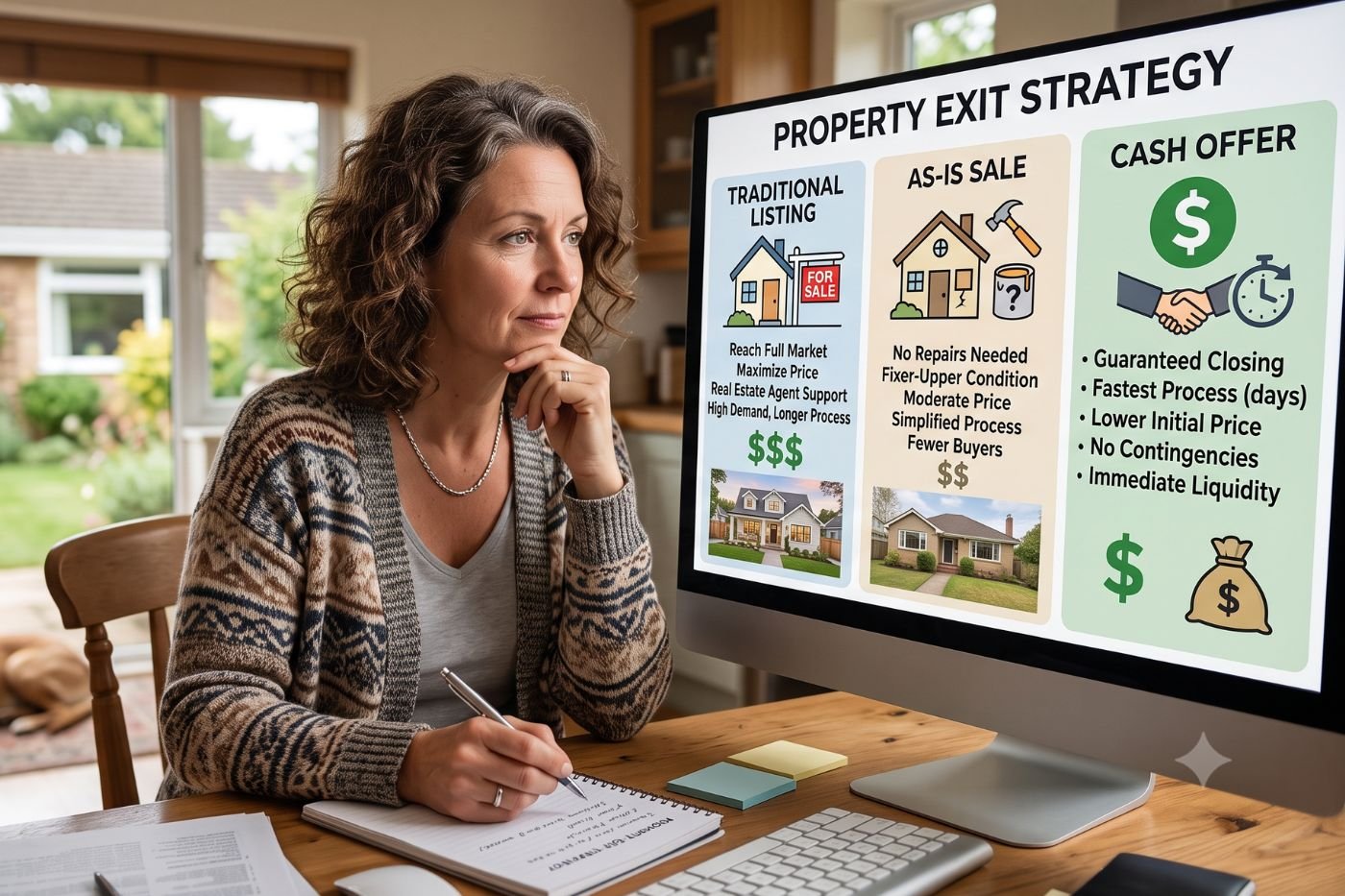
Not every seller needs the same approach. Your property exit strategy should reflect your timeline, your property type, and how much work you are willing to invest before closing. The three primary options for selling properties in Puerto Rico each carry distinct trade-offs in terms of speed, effort, and net proceeds.
The table below compares the three main exit paths available to relocating owners in the Puerto Rico real estate market.
Traditional Listing
A traditional listing with a licensed Puerto Rico real estate brokerage gives you the widest buyer exposure and the best chance of achieving full market value. This approach works especially well for Puerto Rico luxury properties in high-demand areas like Dorado, Condado, and Old San Juan, where active listings are down 12% from Q1 2025 — meaning qualified buyers are competing for fewer options.
Hire a brokerage with a verified network of high-net-worth buyers, both local and international.
Professional photography, drone footage, and virtual tours are non-negotiable for luxury homes priced above $1M.
Price based on a formal comparative market analysis — not on what you paid or what you need to net.
As-Is Sale
An as-is sale suits out-of-state owners who cannot manage pre-listing repairs remotely. You disclose known defects, price accordingly, and attract buyers who are willing to take on the work. This approach shortens your timeline and eliminates the burden of coordinating contractors remotely.
Expect buyers to negotiate harder on price — factor this into your initial ask.
Still requires a title search and tax clearance before closing.
Works well for investment properties, older homes, or properties with deferred maintenance.
Cash Offer
A cash offer from a direct buyer or investor provides the fastest path to closing. Some sellers, particularly those who have already relocated and want to close a chapter quickly, find this option worth the discount. If you have looked into platforms that connect sellers with investors — similar to how Suffolk County House Buyers operates in mainland markets — you will find that Puerto Rico has a growing network of local investors who make direct cash offers on residential and investment properties.
Cash offers typically come in 10–20% below market value.
No financing contingencies means fewer deal-fall risks.
Ideal if your property is vacant and you are concerned about carrying costs, insurance, or security.
Once you select your exit method, pricing your property correctly becomes the most consequential decision you will make in this process.
Pricing Puerto Rico Luxury Real Estate Accurately

Property value in Puerto Rico's luxury segment is not uniform. A beachfront estate in Dorado commands a different price per square foot than a penthouse in Condado or a restored colonial in Old San Juan. High-end Puerto Rico properties commonly emphasize private pools, beach access, and gated communities — and buyers in this segment pay premiums for those features specifically.
The Puerto Rico real estate market currently shows a median price per square foot of $275 island-wide, but luxury homes and beachfront estates in prime locations trade well above that figure.
Factors That Directly Affect Your Listing Price
Location within the island: Dorado Beach, Condado, and Rincón command the highest price-per-square-foot figures in the luxury segment.
Beach access and water views: Direct beachfront access can add 20–40% to comparable inland property values.
Gated community and amenities: Properties within resort-style communities with security, concierge, and club access attract Act 60 relocators and international buyers who pay for lifestyle infrastructure.
Property condition and recent upgrades: Updated kitchens, smart home systems, and hurricane-resistant construction are buyer priorities post-Maria.
Comparable recent sales: The luxury segment saw a median price of $2.4M in Q1 2026 — but individual sales vary widely by size, condition, and micro-location.
What Overpricing Costs You
Days on market accumulate quickly and signal distress to sophisticated buyers.
Price reductions after extended market time typically result in lower final sale prices than if the property had been priced correctly from day one.
Carrying costs — insurance, HOA fees, property taxes, and maintenance — continue to accrue while the property sits unsold.
With pricing resolved, the operational side of managing a sale from off-island deserves direct attention — because it is where most absentee owners run into problems.
Managing the Sale as an Absentee Owner

Absentee owners face specific challenges that local sellers do not. You cannot attend showings, manage repairs in real time, or walk into a notary's office on short notice. Puerto Rico's closing process requires a Puerto Rico-licensed notary attorney (not a title company, as in U.S. mainland transactions), and that process has its own timeline and document requirements.
Out-of-state owners who try to manage this process without local representation consistently encounter delays.
Building Your Local Team
Puerto Rico real estate attorney: Required for the closing deed (escritura). Choose one with experience in non-resident seller transactions.
Licensed Puerto Rico broker: Select a brokerage with demonstrated experience in your property's price range and neighborhood. Christie's International Real Estate Puerto Rico specializes in Puerto Rico luxury homes and has a global buyer network that reaches international relocators actively seeking properties under Act 60.
CPA with Puerto Rico tax expertise: Essential for calculating your actual capital gains exposure and structuring the transaction to protect your net proceeds.
Property manager (if vacant): A vacant property in Puerto Rico is a liability. Hire someone to manage access, security, and basic maintenance until closing.
Power of Attorney Considerations
If you cannot be present at closing, Puerto Rico law allows you to grant a power of attorney (poder notarial) to a local representative.
This document must be notarized and, if executed outside Puerto Rico, apostilled for use in the Puerto Rico property registry.
Plan for this step early — apostille processing times vary by state and can delay your closing if left to the last minute.
The final factor that many relocating owners underestimate is the role that buyer demand — specifically Act 60 relocators — plays in shaping the current opportunity window.
Why the Current Puerto Rico Real Estate Market Favors Sellers
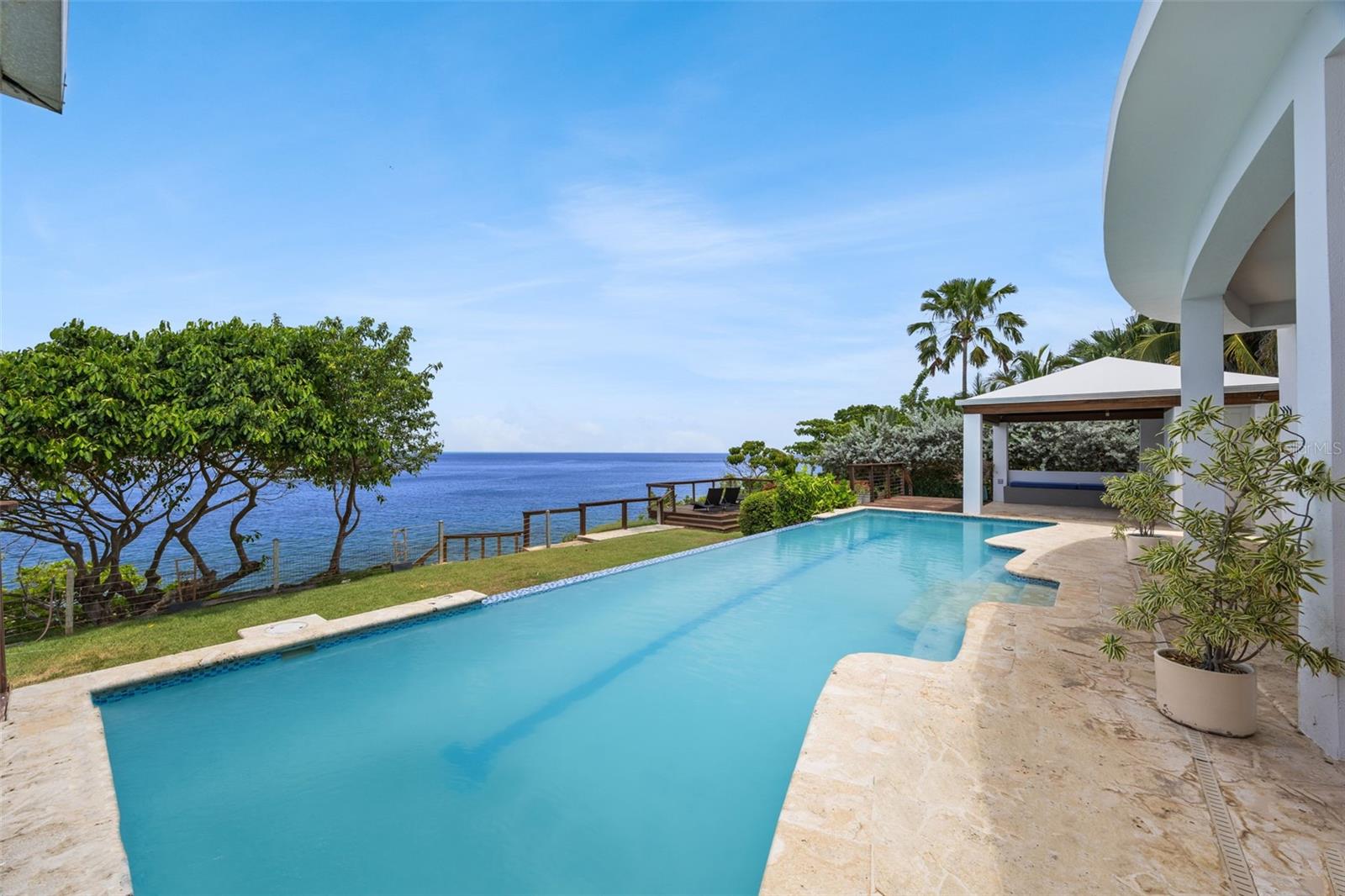
The Puerto Rico real estate market is in a seller-favorable position across the luxury segment. Active listings island-wide are down 12% from Q1 2025, while buyer demand — driven by Act 60 incentives, tourism investment, and international interest in Puerto Rico luxury real estate — remains strong. Act 60 can provide preferential treatment for certain gains realized after becoming a bona fide Puerto Rico resident, subject to eligibility rules.
That buyer pool is exactly the audience that sellers of luxury homes and beachfront estates should be targeting right now.
What This Means for Sellers in 2025–2026
Qualified buyers are actively competing for a shrinking inventory of premium properties.
Sellers who price accurately and present well are seeing faster closings and fewer concessions.
International buyers — particularly from the U.S. mainland, Europe, and Latin America — are entering the Puerto Rico luxury homes market at higher rates than in prior years.
Beachfront estates and properties within established resort communities in Dorado and Condado are attracting the most competitive offers.
Timing Your Exit
Q1 and Q4 tend to show stronger luxury buyer activity in Puerto Rico, which aligns with the tax planning cycles of Act 60 applicants.
Listing during peak seasons attracts more buyer traffic and gives you stronger negotiating leverage.
If you have already relocated and the property is vacant, every month you delay incurs carrying costs and potential market softening.
Conclusion
Selling before relocating works best when title, taxes, pricing, and timing are handled early. A local attorney, CPA, and broker can help protect net proceeds and reduce closing delays. With the right plan, relocating owners can sell confidently in Puerto Rico’s active luxury market.
Christie’s International Real Estate Puerto Rico helps owners buy, sell, and rent luxury properties across the island. If you want discreet guidance and strong market reach, their team is built for premium Puerto Rico properties. Start with a confidential conversation and position your property for the right buyers.
FAQs
Can I complete a Puerto Rico home sale without traveling back to the island?
Yes. Most steps can be handled remotely with a local broker and notary attorney, along with a properly executed power of attorney and a secure document-signing workflow arranged early to avoid closing delays.
What documents should I gather before you order title work and start marketing?
Have your deed info, property registry details, CRIM/property tax receipts, HOA statements (if applicable), insurance declarations, survey/plan copies, permits for additions, and any lease or service contracts ready to speed due diligence and reduce buyer objections
How do I protect a vacant property during the listing period?
Use a local property manager to coordinate regular inspections, storm prep, humidity control, and vendor access; keep utilities and insurance properly maintained and document upkeep to support negotiations after inspection.
Related Articles: