Renting before buying in Puerto Rico gives you time to evaluate the island as a resident, not a visitor. Daily life can vary by street, building, utility setup, flood exposure, traffic pattern, and community rules. A lease is therefore more than a temporary housing choice: it is a practical due-diligence period before a high-value purchase.
This guide explains what to test during that period, how renting interacts with federal bona fide residence rules and Puerto Rico's Act 60, and what to compare in Condado, Dorado, Bahía Beach, Old San Juan, Palmas del Mar, Rincón, and other luxury markets.
Key Takeaways
A 6- to 12-month lease gives buyers time to compare Puerto Rico neighborhoods under ordinary conditions.
A rental period should test power backup, water storage, flood exposure, internet service, noise, and commute times.
Renting can support a move to Puerto Rico, but a lease alone does not establish federal bona fide residence.
Act 60 decree holders must follow the purchase deadline and ownership terms in current law and their individual decrees.
Buyers should verify building, HOA, insurance, permitting, and utility details before making an offer.
What Renting Reveals That a Property Tour Cannot

A property tour shows finishes, views, and amenities. It rarely shows how a generator performs during a prolonged outage, whether a cistern serves the entire building, how quickly water pressure recovers, or how noise changes after dark. A rental period lets you observe those conditions over time.
It also tests the routines that determine whether a neighborhood works: school and airport runs, medical access, grocery trips, parking, deliveries, pet rules, guest policies, beach access, and weekend traffic. These are property-selection factors, not lifestyle trivia.
Use the Lease as a Due-Diligence Plan
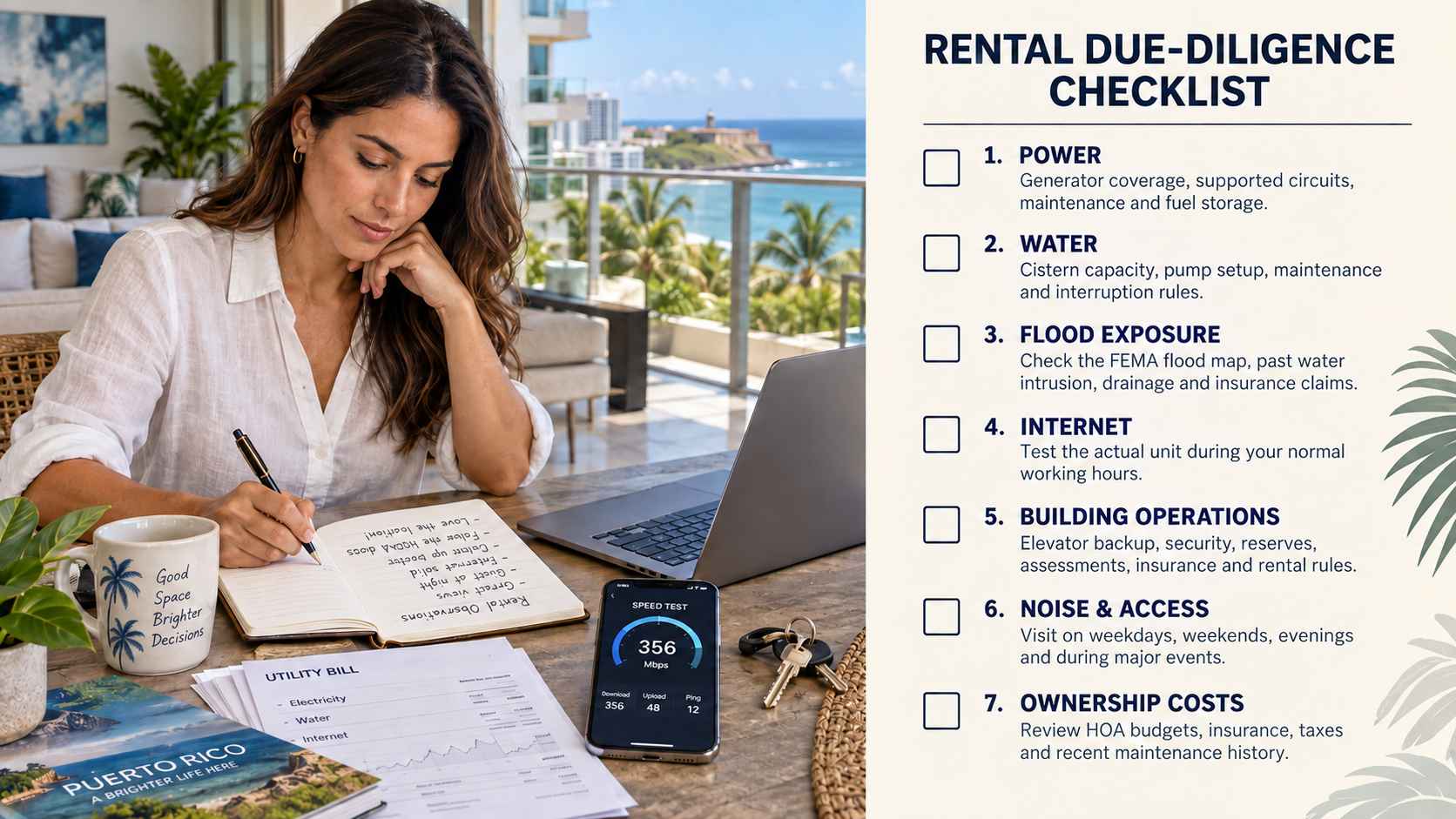
Do not treat the rental period as passive waiting. Record what you learn and compare properties against the same criteria.
Power: Confirm whether the unit has a generator, which circuits it supports, who maintains it, and how it stores fuel.
Water: Identify the cistern capacity, pump arrangement, maintenance responsibility, and any building rules during interruptions.
Flood exposure: Search the address in the FEMA Flood Map Service Center, then ask about past water intrusion, drainage, and insurance claims.
Internet: Test the actual unit at the hours when you work; a provider's neighborhood coverage does not guarantee in-unit performance.
Building operations: Review elevator backup, security, reserve funding, special assessments, insurance, and short-term-rental rules.
Noise and access: Visit on weekdays, weekends, evenings, and during major local events.
Ownership costs: Request current HOA budgets, insurance information, tax records, and recent maintenance history before making an offer.
Use the same checklist when evaluating luxury properties in Puerto Rico so that a dramatic view does not overshadow building systems, legal restrictions, or recurring costs.
Act 60 and Federal Residency Are Separate Questions

Renting can help establish a home in Puerto Rico, but it does not automatically make someone a bona fide resident for U.S. federal tax purposes. The IRS requires a taxpayer to meet a presence test, have no tax home outside Puerto Rico, and have no closer connection to the United States or another country than to Puerto Rico. The commonly discussed 183-day route is one way to meet the presence test, not the entire test; the IRS Tax Guide for Individuals With Income From U.S. Territories explains the alternatives and exceptions.
Act 60 adds a separate Puerto Rico requirement for Resident Individual Investors. The current Puerto Rico Incentives Code requires qualifying decree holders to document ownership of Puerto Rico real property used as a principal residence within the applicable period, generally tied to two years after the decree. Application date, amendments, and the decree itself can affect the governing terms, so confirm the deadline with qualified Puerto Rico tax and legal advisers before signing a long lease or delaying a purchase.
The practical sequence is straightforward:
Rent while comparing neighborhoods and building types.
Track federal presence, tax-home, and closer-connection requirements separately.
Confirm the Act 60 purchase deadline stated in the law and your decree.
Begin legal, financing, title, and property due diligence well before that deadline.
Compare the Decision Without Invented Market Averages

Island-wide rent, yield, deposit, and closing-time averages can mislead luxury buyers because property type, community, furnishings, financing, and season materially change the result. Compare actual alternatives instead.
This property-level comparison is more useful than a generic claim that renting or buying always wins.
What to Test in Puerto Rico's Luxury Markets

Test each luxury market’s lifestyle, infrastructure, accessibility, property quality, and long-term suitability before buying.
Condado and Isla Verde
Test traffic, nighttime noise, parking, salt exposure, elevator backup, generator coverage, and each condominium's guest and short-term-rental rules. In Condado, compare oceanfront, Ashford Avenue, and lagoon-side buildings separately rather than treating the neighborhood as one market.
Dorado
Compare Dorado Beach, Plantation, Sabanera, and other gated communities by commute, membership structure, HOA obligations, school access, security procedures, and backup systems. Similar map locations can produce different ownership experiences.
Bahía Beach and Palmas del Mar
Use a rental stay to test the resort routine outside a holiday visit. Review club access, community fees, property-management options, travel time to San Juan, and the services included with the specific residence.
Old San Juan and Santurce
In Old San Juan, verify flood exposure, parking, deliveries, building condition, and the approval path for planned alterations. Puerto Rico's coastal-management materials state that the Institute of Puerto Rican Culture administers historic-district rules for public and private property in Old San Juan, so check renovation assumptions before purchase in the official planning guidance. In Santurce, evaluate the exact block and building rather than relying on a broad neighborhood label.
Rincón and the West Coast
Test travel time to Aguadilla and San Juan, internet at the residence, water storage, generator capacity, road access, and property management during periods when you are away. Seasonal visits alone may not reveal the routine of full-time or second-home ownership.
Verify Utilities at the Address Level
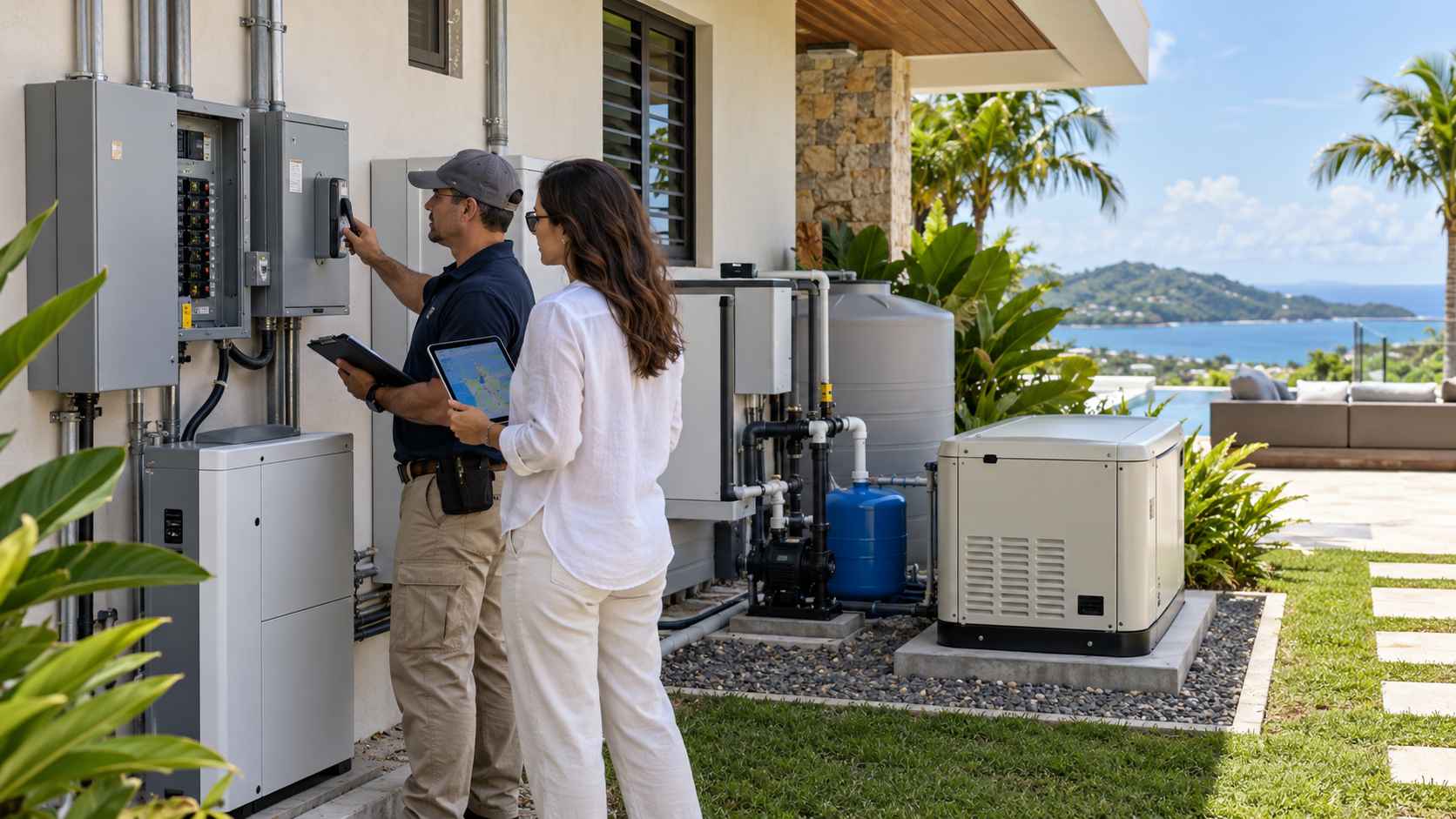
Broad claims that one neighborhood has reliable power or another has weak water pressure don't replace property-level evidence. Ask the owner, building manager, and inspector for records; test the systems; and verify who pays for maintenance and fuel.
LUMA's official customer portal provides outage reporting and an outage map, as described on its Mi LUMA resources page. Use that information as one input, then inspect the property's generator, transfer switch, battery or solar setup, cistern, pumps, and critical circuits. For condominiums, confirm whether backup power serves only common areas or also reaches the residence.
Community Advice Is Useful but Anecdotal
Online discussions can surface questions that formal guides overlook, but they are not market data. In a long-running Puerto Rico travel thread, commenters recommend spending time in candidate areas and, in one case, renting for a year before buying. Treat that advice as a prompt for due diligence, not proof that one lease length or neighborhood is right for every buyer.
Decide When the Evidence Is Strong Enough to Buy

The end of a lease should produce a decision file, not just an impression. You should know which area fits, which compromises are acceptable, what the building documents show, how the property performs during ordinary disruptions, and what ownership will cost under current quotes.
Before making an offer, confirm:
title and survey matters with Puerto Rico counsel;
the inspection scope and any specialist reports;
flood-zone information and insurability;
HOA financials, minutes, assessments, and use restrictions;
utility backup and maintenance responsibilities;
permits and historic-district approvals for planned work; and
the Act 60 and federal residency timeline with qualified advisers.
Conclusion
Renting before buying in Puerto Rico turns relocation time into property-level due diligence. A full lease term lets you compare neighborhoods, test infrastructure, and separate vacation appeal from daily fit. Buy only after the location, building, legal obligations, and ownership costs support your long-term plan.
If you are buying, selling, or renting a luxury home, speak with a team that works across Puerto Rico's prime markets. Christie's International Real Estate Puerto Rico can help you evaluate Puerto Rico luxury properties with disciplined, local guidance. Contact the brokerage to plan your next move.
FAQs
How long should I rent before buying in Puerto Rico?
Six to twelve months is a practical evaluation period for many relocators, but it is not a legal rule. Choose a term long enough to test the property, neighborhood, commute, and services under normal living conditions.
Can I rent while establishing bona fide residence in Puerto Rico?
A lease can support evidence that you maintain a home in Puerto Rico, but it does not establish bona fide residence on its own. You must consider the IRS presence, tax-home, and closer-connection tests.
Does renting satisfy the Act 60 home-purchase requirement?
No. Renting does not replace the real-property ownership requirement for a qualifying Resident Individual Investor decree. Confirm the applicable deadline and ownership conditions in current law and your decree.
What should I verify before buying after a rental period?
Review the title, survey, inspection findings, flood information, insurance, HOA records, permits, utility backup, recurring costs, and any tax-residency deadlines before committing to a purchase.