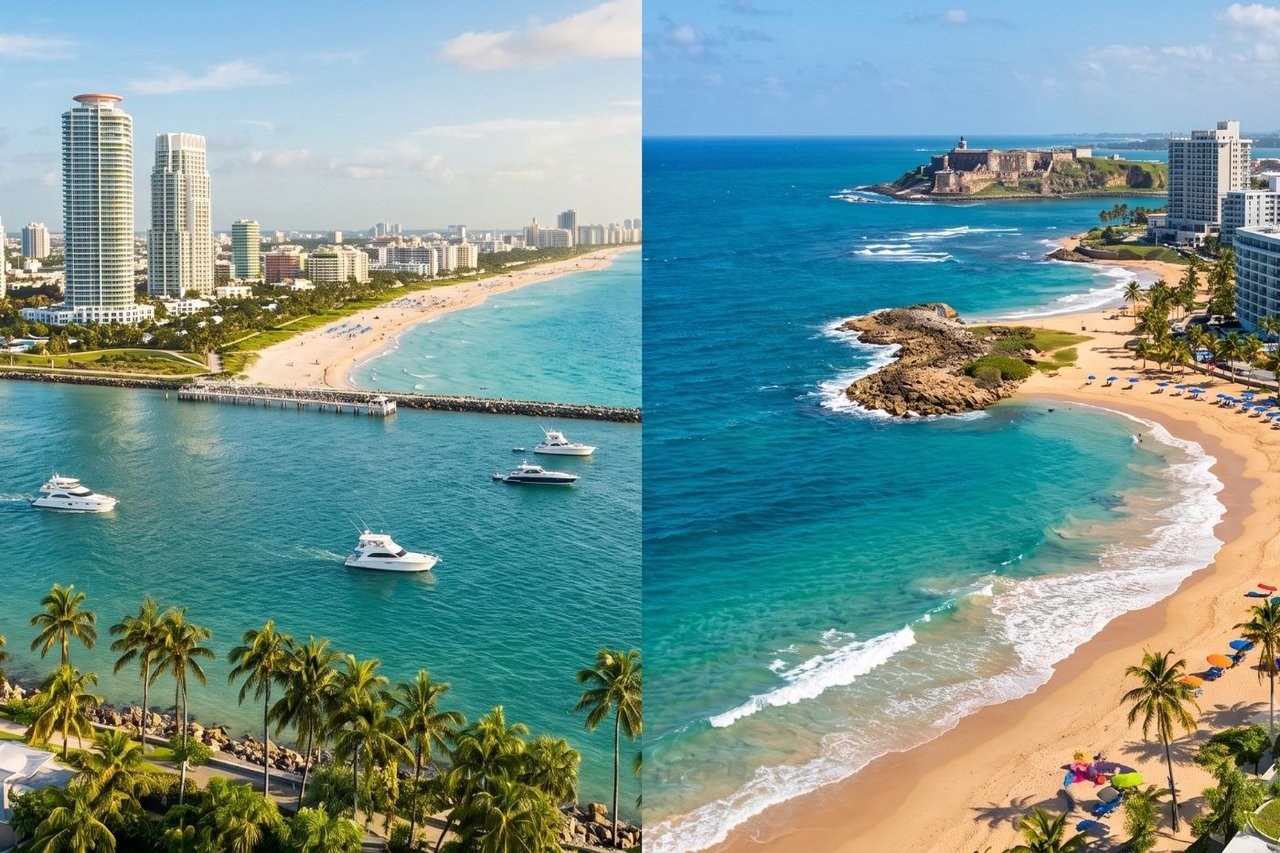
Financing decisions—specifically loan structure, insurance costs, property taxes, and lender selection—directly determine whether a coastal home purchase builds long-term wealth or quietly drains it. In both South Florida and Puerto Rico, buyers who treat financing as an afterthought often discover that carrying costs exceed their initial projections by a wide margin.
In this article, we cover how the two markets differ in their financing environments, how insurance and taxes reshape real affordability, what role local lending experts play, and the concrete steps you can take to avoid overextending on a coastal purchase.
Key Takeaways
Financing decisions shape the true cost of coastal homeownership.
South Florida and Puerto Rico follow different lending processes.
Insurance and property taxes can significantly affect affordability.
Puerto Rico buyers should work with local lending and tax experts.
A structured advisory team helps prevent costly financing mistakes.
How Financing Drives Coastal Buying Decisions in South Florida and Puerto Rico

South Florida and Puerto Rico both offer premium coastal home financing opportunities, but the mechanics behind each market diverge sharply once you move past the surface. In South Florida, buyers typically access a well-established network of conventional lenders, jumbo loan products, and second home financing coastal markets programs that follow familiar Fannie Mae and Freddie Mac guidelines. Puerto Rico, as a U.S. territory, technically qualifies for many of the same federal loan programs, but local lenders often apply stricter documentation requirements, longer timelines, and different down-payment thresholds that catch mainland buyers off guard.
A trusted mortgage broker in Fort Lauderdale can help you structure a South Florida waterfront property loan with relative efficiency, but that same broker may have limited familiarity with Puerto Rico real estate financing nuances—which is exactly why cross-border buyers need to engage a local Puerto Rico lender in parallel rather than assuming the same process applies island-wide.
South Florida Waterfront Financing at a Glance
South Florida waterfront homes sit in one of the most competitive and liquid luxury real estate financing markets in the country. Lenders here are experienced with high-value coastal transactions, and jumbo loan products for properties above the conforming loan limit are widely available across Miami-Dade, Broward, and Palm Beach counties.
Jumbo loans for luxury waterfront properties typically require 20–30% down, strong reserves, and detailed income documentation.
Second home financing coastal markets rules apply when the property is not your primary residence, which affects interest rates and reserve requirements.
Vacation home financing structures differ from investment property loans—lenders scrutinize intended use carefully.
South Florida mortgage advisors with coastal market experience understand how flood zone designations affect loan eligibility and insurance escrow requirements.
Interest rate locks on jumbo products tend to have shorter windows, so buyers must move efficiently once pre-approved.
Puerto Rico Luxury Home Financing: What Changes
Puerto Rico luxury homes attract a different buyer profile—one that often combines lifestyle goals with a deliberate tax and wealth strategy. Financing in Puerto Rico involves local banks and credit unions that operate with their own underwriting standards, and those standards do not always mirror what mainland buyers expect from a jumbo or second-home product.
Down-payment requirements from local Puerto Rico lenders can range from 20% to 30% or higher for non-resident buyers purchasing luxury or waterfront properties.
Documentation requirements often include additional proof of income sources, especially for buyers whose earnings come from investment portfolios or business entities.
Loan timelines in Puerto Rico tend to run longer than in South Florida, sometimes by several weeks, which affects offer strategy and closing timelines.
Some buyers use portfolio loans or private financing to move faster and avoid the documentation friction of traditional bank underwriting.
Vacation home financing Puerto Rico structures may also intersect with Act 60 planning, which requires coordination between your lender, tax attorney, and real estate advisor before closing.
Insurance and Property Taxes: The Hidden Cost Drivers in Coastal Markets

Insurance costs for waterfront homes represent one of the most significant and least discussed variables in any coastal home purchase. Whether you are buying in South Florida or Puerto Rico, the annual cost of wind, flood, and hazard coverage can add tens of thousands of dollars to your carrying costs—and that number directly affects how much home you can realistically afford given your financing structure. Property taxes in coastal markets add another layer, and the two markets treat taxation very differently, which creates real planning opportunities for informed buyers.
Getting these numbers wrong at the offer stage is a common and costly mistake. Buyers who build insurance and tax estimates into their financing model from the start make better decisions at every step.
Insurance Costs for Waterfront Homes: South Florida vs. Puerto Rico
Both markets carry elevated insurance risk due to hurricane exposure, storm surge potential, and coastal erosion. The cost profile, however, differs in ways that affect your monthly payment and overall loan qualification.
Property Taxes in Coastal Markets: A Real Advantage in Puerto Rico
Property taxes in coastal markets represent a meaningful line item in any carrying cost analysis.
In many South Florida coastal municipalities, combined property tax rates on luxury waterfront homes commonly approach 1%–2% of assessed value annually, which, on a $5 million property, can mean tens of thousands of dollars in taxes.
In Puerto Rico, effective property tax burdens on residential real estate are generally lower, with assessed values often set below market value in practice, but buyers should request up‑to‑date estimates for specific municipalities and properties from their advisor or local tax office before committing to a purchase.
Beyond base property taxes, Puerto Rico's Act 60 incentives offer qualifying buyers a reduced capital gains tax rate of 0% on appreciation accrued after establishing residency, along with reduced income tax rates on certain categories of income. These incentives make Florida and Puerto Rico real estate a fundamentally different financial calculation—and they make the role of tax planning inseparable from the financing decision itself.
The Role of Local Lending Experts and Real Estate Advisors in Each Market

In both South Florida and Puerto Rico, the quality of your lending and advisory team shapes the outcome of your purchase as much as the property itself. International coastal property buyers who approach these markets without local expertise often encounter delays, mispriced offers, or financing structures that don't align with their tax strategy. The right team prevents all three problems simultaneously.
This is not a market where generalist advice serves you well. The financing variables are specific, the insurance market is specialized, and the tax implications are complex enough to require dedicated professionals on both sides of the transaction.
What a South Florida Mortgage Advisor Brings to the Table
A South Florida mortgage advisor with coastal market experience understands the specific dynamics of waterfront property loans in a high-value, high-risk insurance environment. They can structure your loan to account for flood zone designations, help you choose between jumbo products and portfolio loans, and coordinate with your insurance broker to ensure your escrow estimates reflect actual coastal premiums rather than generic figures.
They know which lenders are most competitive on jumbo coastal products in the current rate environment.
They understand how the second home financing coastal markets guidelines affect your qualification ratios when insurance costs are factored in.
They can advise on whether a vacation home financing structure or an investment property loan better fits your intended use and tax situation.
They coordinate with title companies experienced in waterfront transactions, where easements, riparian rights, and coastal setback issues frequently arise.
Why Puerto Rico Requires a Different Lending Approach
Cross-border real estate financing for Puerto Rico demands a local lender who understands both the island's banking infrastructure and the buyer profile of someone coming from the mainland.
Local banks and credit unions in Puerto Rico—such as FirstBank Puerto Rico, Banco Popular, and Oriental—maintain their own underwriting criteria for luxury and beachfront purchases, which can differ materially from mainland jumbo and second‑home loan standards and may change depending on whether buyers intend to establish residency or use the property as a vacation home.
Buyers pursuing Act 60 residency should work with a lender who understands how that process affects their income documentation and residency timeline.
Private lenders and portfolio loan products offer faster timelines for buyers who need to move quickly on competitive listings in Dorado or Condado.
A Puerto Rico real estate financing specialist can help you avoid the common mistake of assuming your mainland pre-approval letter carries the same weight with local sellers.
Coastal mortgage strategies in Puerto Rico often involve structuring the purchase through an LLC or trust, which requires lender familiarity with entity-level financing.
Christie's International Real Estate Puerto Rico's Advisory Role
Christie's International Real Estate Puerto Rico connects buyers with the legal, financial, and lending specialists needed to execute a purchase that aligns with their broader wealth strategy. The team's background in private equity and institutional finance means that financing conversations happen at the right level of sophistication from the first meeting. Buyers gain access to off-market properties—listings not publicly available—alongside the financial context needed to evaluate them accurately.
With the right team identified, the final step is building a clear, sequential plan before you make an offer.
Practical Steps for Coastal Buyers Moving From South Florida to Puerto Rico

Buyers who approach cross-border coastal purchases with a structured process consistently outperform those who improvise. The steps below reflect the sequence that experienced international coastal property buyers use to move from initial interest to a closed transaction without overextending financially. Each step builds on the previous one, and skipping any of them tends to create problems downstream.
Establish your financing ceiling before you search. Work with both a South Florida mortgage advisor and a Puerto Rico lender simultaneously to understand what loan products you qualify for in each market. Your qualification ratios will vary depending on the lender you use, how insurance costs are modeled, and whether the purchase is structured as a second home or an investment property.
Commission a full insurance cost estimate early. Before you fall in love with a specific property, ask your insurance broker to provide a realistic annual premium estimate based on the property's flood zone, construction type, and coastal exposure. This number belongs in your financing model from day one, not after your offer is accepted.
Engage a Puerto Rico tax attorney before closing. If Act 60 is relevant to your situation, your attorney needs to be involved before you structure the purchase, not after. Residency timing, income sourcing, and property ownership structure all interact with your financing decisions in ways that are difficult to unwind after the fact.
Evaluate property taxes in coastal markets for both locations. Run a side-by-side comparison of annual carrying costs—mortgage payment, insurance, property taxes, HOA if applicable, and maintenance reserves—for comparable properties in South Florida and Puerto Rico. The gap is often larger than buyers expect, and it frequently tips the decision.
Assess the property's resilience features as part of your due diligence. In Puerto Rico especially, concrete construction, impact-rated openings, backup power systems, and elevated foundations materially affect both insurance costs and long-term value. Your financing model should reflect the property's actual condition, not an idealized version.
Align your offer strategy with your financing timeline. Puerto Rico loan timelines are longer than those in South Florida. Build that reality into your offer's contingency periods and communicate it clearly to the seller's representative from the start. Christie's International Real Estate Puerto Rico can help you negotiate terms that reflect local market norms without putting you at a disadvantage.
Review your coastal mortgage strategies with all advisors present. Before signing a purchase agreement, have your lender, tax attorney, insurance broker, and real estate advisor review the transaction structure together. Misalignment between these parties is the most common source of last-minute complications in luxury coastal transactions.
Puerto Rico’s beachfront and waterfront inventory remains substantial, with a notable concentration of luxury products in areas such as Condado, Dorado, and Rincón. Because listing counts change regularly, buyers should rely on current market data and MLS‑based reports from their advisor rather than static inventory numbers when evaluating opportunities.
Final Thoughts on Coastal Home Financing Across Two Markets
Smart coastal financing is about more than securing a loan. Buyers comparing South Florida and Puerto Rico need to factor in insurance, taxes, lender timelines, and long-term ownership costs before making an offer. With the right advisory team, coastal real estate can support both lifestyle goals and wealth planning.
Whether you want to buy, sell, or rent a luxury property in Puerto Rico, expert local guidance matters. Christie’s International Real Estate Puerto Rico helps clients evaluate premium homes, financing considerations, and market opportunities with confidence. Connect with our team today to explore Puerto Rico’s most desirable coastal and luxury properties.
FAQs
How do condo HOAs and special assessments affect loan approval and affordability?
Monthly HOA dues and any pending special assessments are counted in your debt-to-income ratio and can reduce the loan amount you qualify for. Lenders may also require additional condo documentation and review building financials, so confirm fees, reserves, and scheduled assessments before you finalize your budget. Review condo mortgage requirements for additional guidance.
What due diligence items are unique to waterfront properties beyond the inspection?
Review shoreline or beach access rights, seawall condition and permits, coastal setback rules, and any recorded easements. For condos, request the association’s insurance summary and recent engineering or structural reports to avoid inheriting deferred maintenance costs.
What’s the best way to compare “true monthly cost” between South Florida and Puerto Rico homes?
Build a single side-by-side worksheet that includes principal/interest, insurance, property taxes, HOA, utilities, maintenance reserves, and any generator or water-storage upkeep. Use written quotes (insurance and HOA) and conservative buffers so your comparison reflects actual cash flow, not just the mortgage payment. For more help, see homebuying resources.
Related Articles: