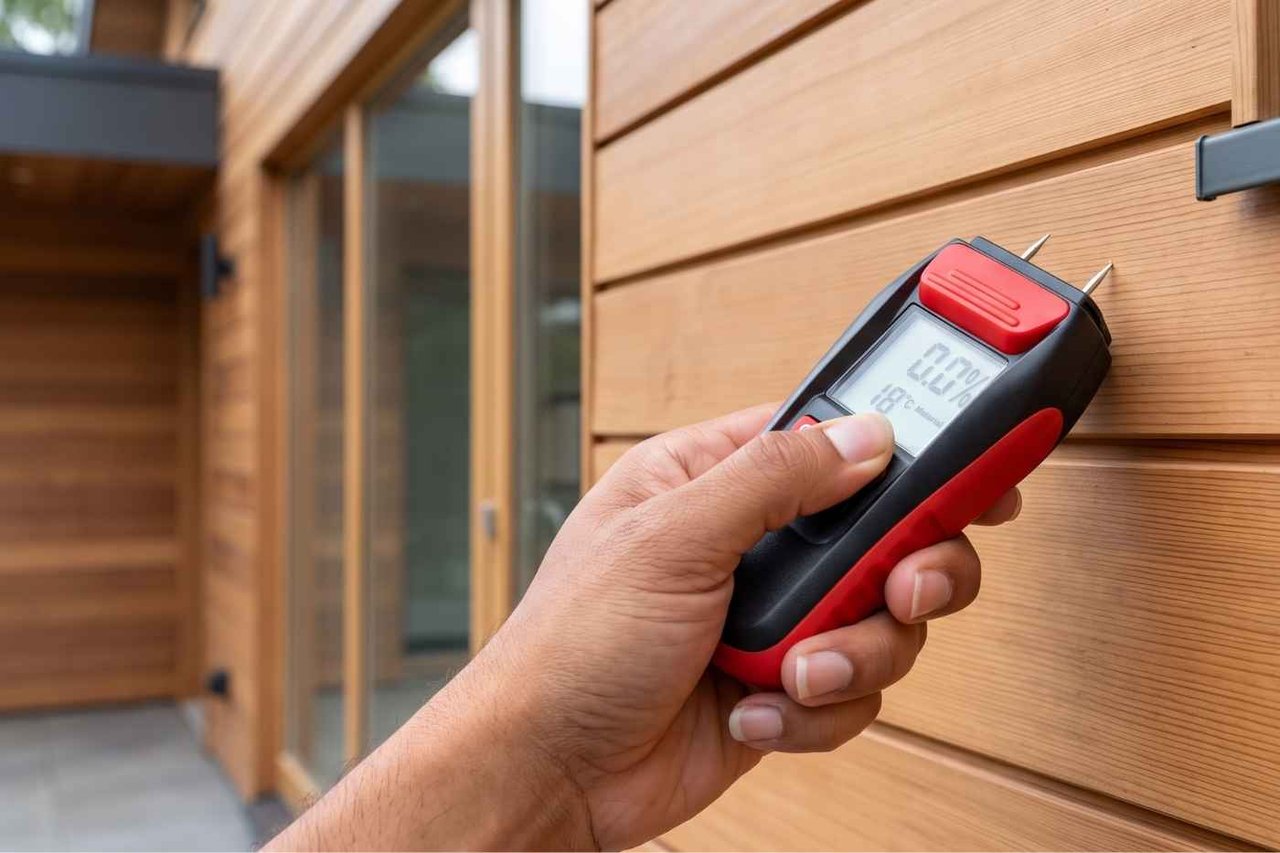
What separates a luxury home from an expensive one is often invisible to the eye. It lives in the quality of materials, the precision of the craftsmanship, and the degree of care that goes into maintaining both over time. Hand-carved walnut paneling, wide-plank oak flooring from centuries-old growth, bespoke cabinetry fitted to tolerances of less than a millimeter: these are the features that define a genuinely exceptional property. They are also the features most vulnerable to a threat that arrives silently and leaves slowly.
Moisture in wood is the most destructive force in any fine interior. And in luxury properties across coastal residences, alpine retreats, historic townhouses, and contemporary villas, managing it is not a cosmetic concern. It is both structural and financial.
Why Wood in High-Value Interiors Is Uniquely Vulnerable
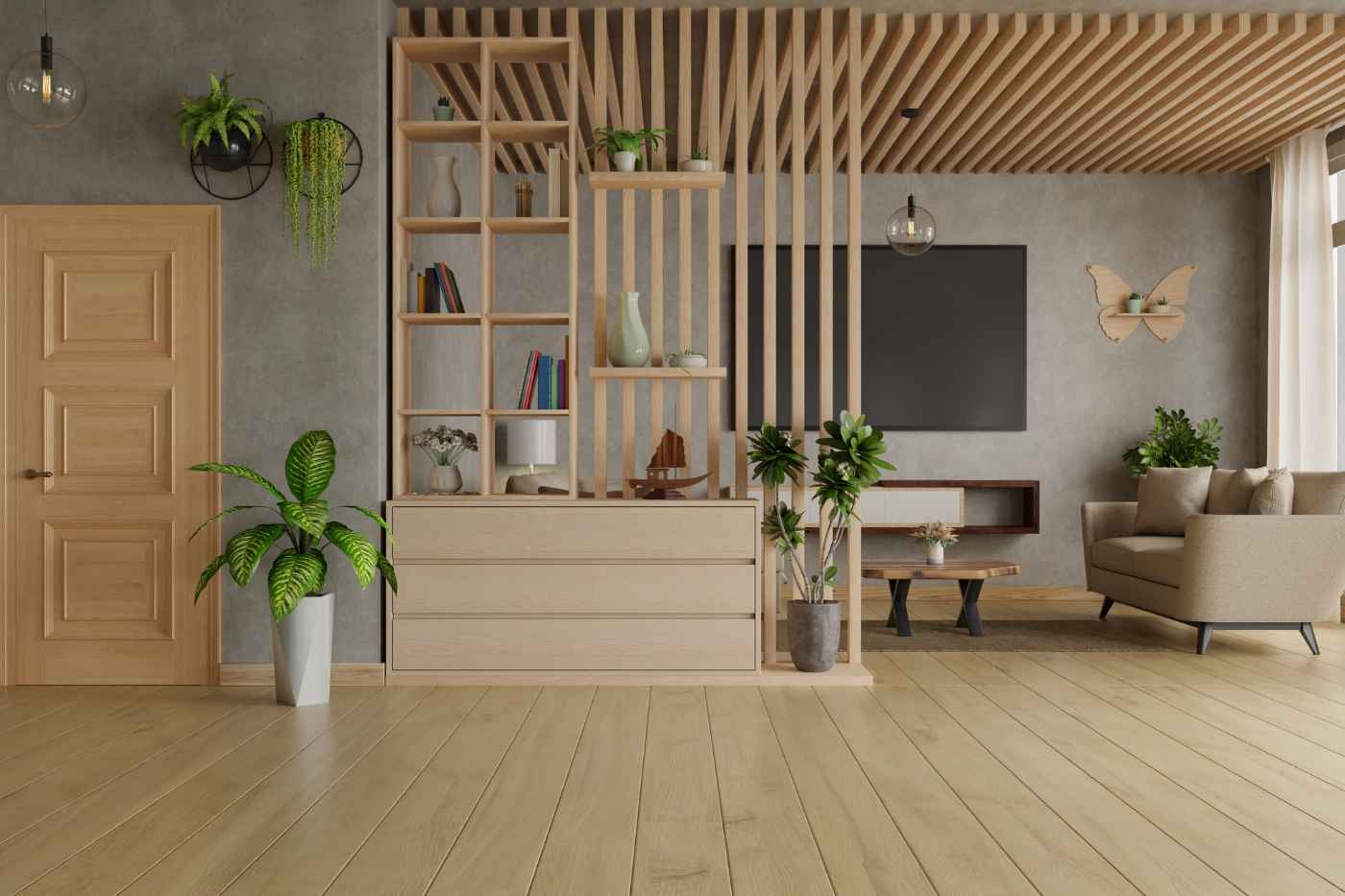
Wood is a hygroscopic material. It absorbs and releases moisture in response to the relative humidity of the air around it. In a standard residential property, minor fluctuations in wood moisture content produce minor effects: a door that sticks in summer, a floorboard that creaks in winter. These are tolerable.
In luxury interiors, the same fluctuations produce different consequences. Wide-plank floors cup and gap because their greater surface area amplifies movement. Inlaid marquetry separates at joints fitted to vanishingly tight tolerances. Antique panels warp against fixings never designed to accommodate movement.
The materials that make a luxury interior exceptional are often the most sensitive to moisture variation. Exotic hardwoods like ipe, teak, and wenge respond more dramatically to humidity changes than domestic timbers. Antique wood, dried over generations to a stable moisture level, is particularly susceptible to the swings that come with modern heating and seasonal extremes.
What Moisture Measurement Actually Tells You
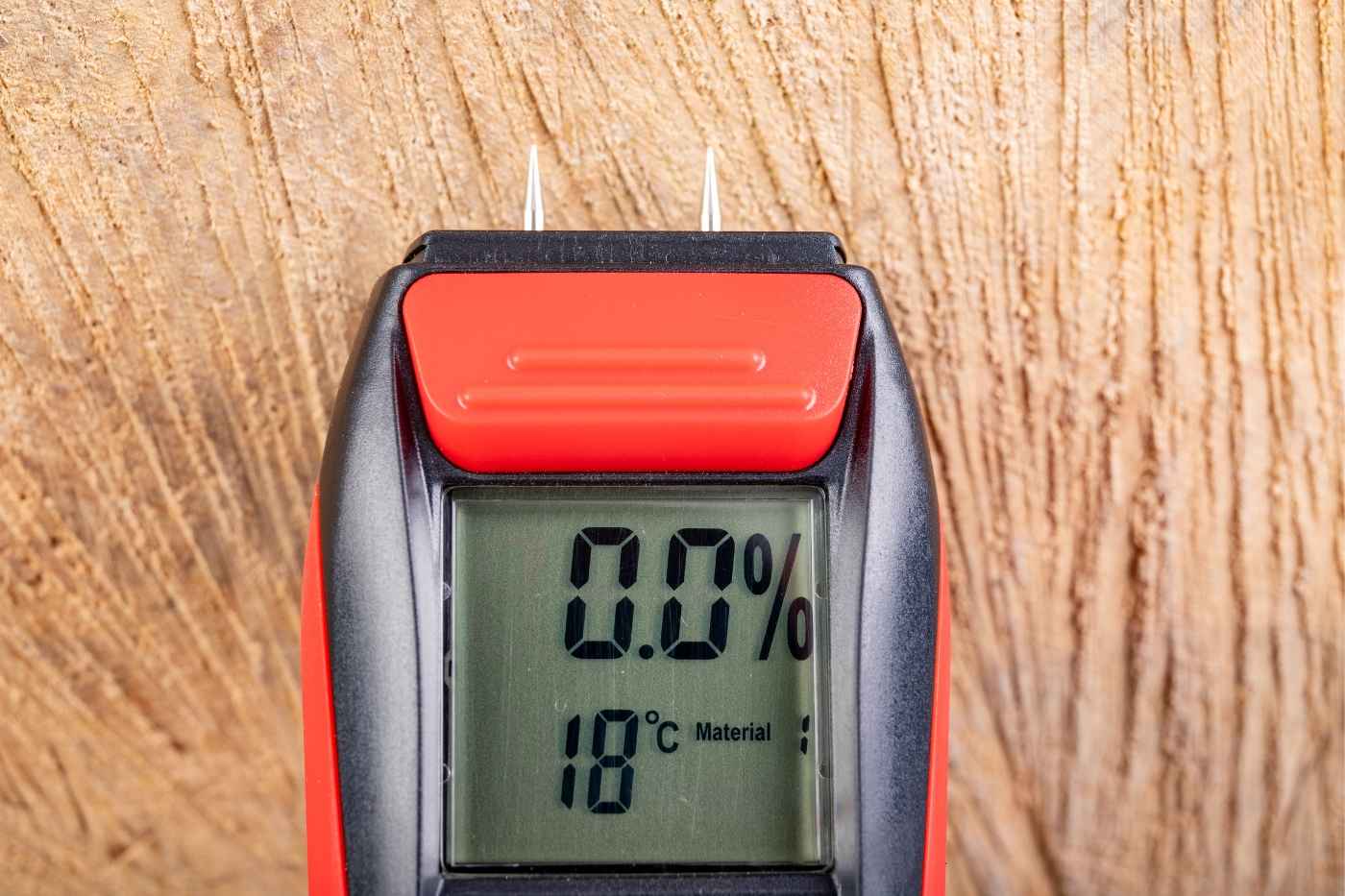
The moisture content of wood is expressed as a percentage of its oven-dry weight. Most interior wood in temperate climates should sit between 6% and 9% for stable conditions. Above 20%, biological degradation becomes active, increasing the risk of wood rot and mould growth. Between 9% and 19%, the wood enters a transitional zone where expansion and contraction become more pronounced, placing stress on finishes, joinery, flooring, cabinetry, and structural elements.
Wood is a hygroscopic material, meaning it naturally absorbs and releases moisture in response to changes in its environment. As temperature and humidity levels fluctuate, the moisture content of timber changes as well. Over time, these fluctuations can lead to warping, cracking, cupping, shrinking, or separation in wood products if conditions are not properly controlled.
For luxury properties with sophisticated climate control systems, this is a two-edged reality. The same system that maintains human comfort can, if calibrated without reference to the needs of the interior's materials, push wood moisture content outside the stable range during heating seasons, seasonal transitions, or periods when the property is unoccupied and systems are running at reduced capacity.
The Properties Where This Matters Most

Moisture management in wood is a universal consideration in construction and restoration, but it is most consequential in specific contexts that are disproportionately represented in the luxury residential market.
Coastal and waterfront properties: Proximity to water means elevated ambient humidity, salt air that interacts with wood surfaces differently from inland environments, and the challenge of managing interior conditions in a climate where outdoor moisture levels are persistently high. Teak used in marine-grade exterior applications in these properties can see moisture content swing dramatically between wet and dry seasons.
Alpine and mountain residences: High-altitude properties face extreme seasonal humidity variation. A chalet in the Swiss Alps or a Colorado mountain home experiences very low interior humidity during cold, dry winter heating seasons and significantly higher levels in summer. Wide structural timbers in these properties are under considerable stress from this annual cycle.
Historic and heritage properties: The original timber structures of historic houses have typically reached a stable equilibrium over centuries. Renovation, the installation of modern heating, or changes in occupation patterns disrupt that equilibrium. A Georgian townhouse in London or a 19th-century Parisian hôtel particulier contains structural timber elements that respond poorly to the humidity drops caused by central heating in rooms that were originally heated by open fire.
Contemporary villas with large glazed façades: Extensive glazing creates significant solar gain and moisture variability. Floor-to-ceiling glass panels transmit solar energy that drives moisture out of adjacent wood floors and paneling faster than interior conditions can compensate.
Measuring Moisture Before, During, and After
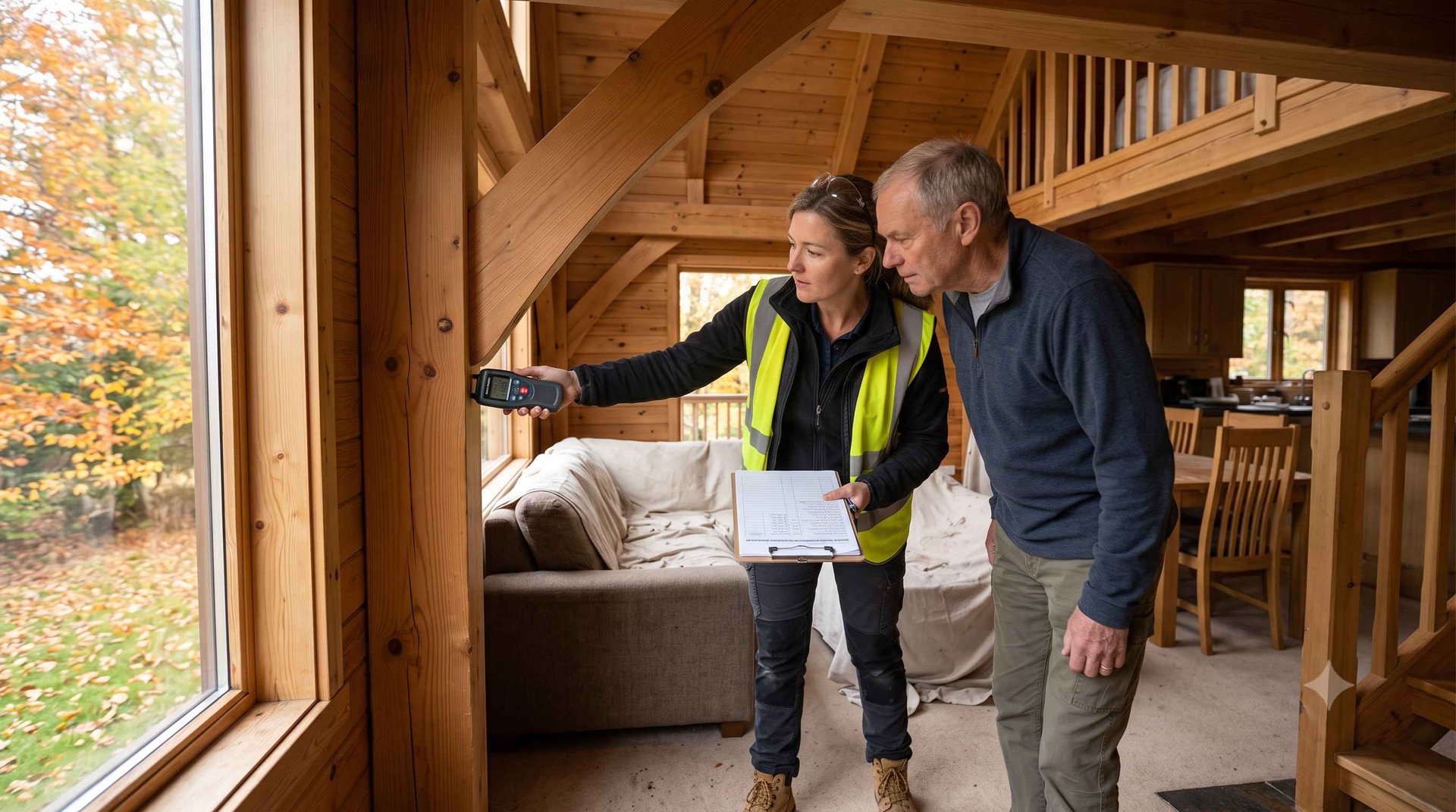
Professional property managers and estate stewards working with high-value residences use moisture measurement at three distinct stages.
At acquisition and pre-renovation: Baseline moisture readings across all timber elements before work begins provide the reference point against which future measurements are compared. A purchaser benefits from knowing the moisture status of subfloor timbers and millwork before committing to a specification.
During construction and installation: Flooring installed at 12% moisture content in a heating season that stabilises around 8% equilibrium will shrink and gap visibly. Wood installed at or below its expected equilibrium will not. This is the source of the most common and most expensive defect claims in luxury residential construction.
Ongoing monitoring in occupied properties: Seasonal monitoring of key timber elements, particularly in seasonally occupied properties, provides early warning of conditions that will produce visible damage before that damage appears.
For property managers and homeowners who want a reliable tool for this purpose, exploring a professional-grade wood moisture meter designed for residential use provides the measurement capability that preserving fine interiors requires.
SensoraHome offers wood moisture meters built for both professional inspectors and property owners who need accurate, reliable readings without specialised training.
The Financial Case for Measurement Over Remediation

Replacing cupped wide-plank flooring to match the existing grain and finish is expensive. So is refinishing marquetry that has lifted, or repairing antique paneling that has warped beyond what fixings can hold.
The cost of a moisture meter and ten minutes surveying a room is not in the same financial category as the remediation that follows an undetected humidity event. For properties where the materials themselves represent a significant portion of the asset's value, moisture measurement is an asset protection.
Conclusion
The finest wood interiors in residential properties around the world share a single vulnerability: their sensitivity to the moisture content of the air around them. Managing that vulnerability requires measurement, not guesswork.
A wood moisture meter, used consistently and at the right points in a property's lifecycle, is the tool that bridges the gap between the ambition of a luxury interior and its preservation over decades. For properties where that interior represents both an aesthetic statement and a substantial investment, that is a bridge worth building.
Related Articles: