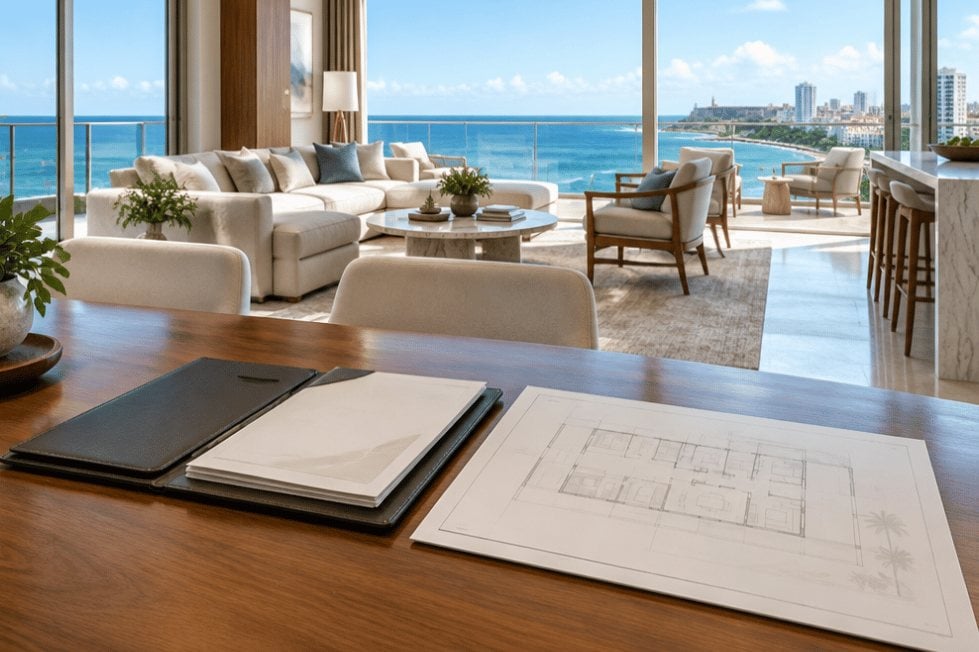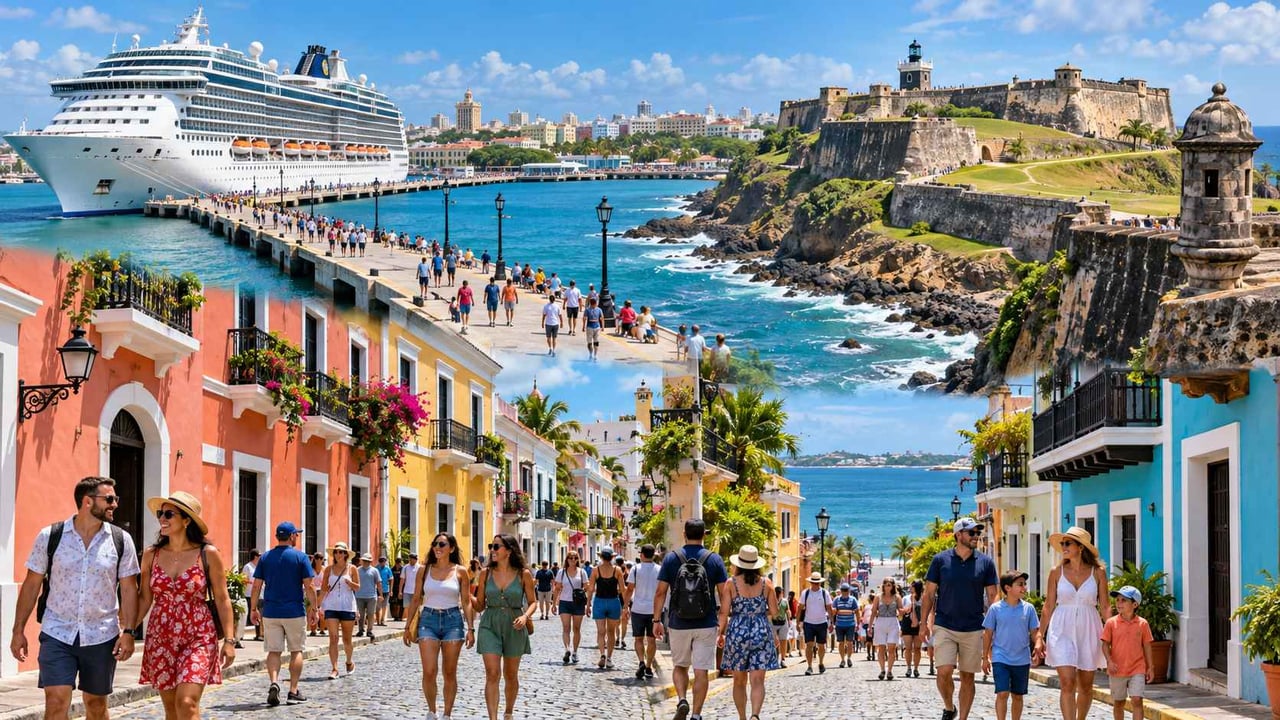
The composition of Puerto Rico’s luxury real estate market has shifted meaningfully over the last five years, especially across Condado, Dorado, Río Grande, and branded-residence communities. Post-2017 tax-incentive arrivals created the first visible wave of high-net-worth demand, but the quieter second wave from the Northeast U.S. now matters more for inventory planning, pricing strategy, and long-term luxury development.
For brokers, developers, and sellers, this buyer pipeline helps explain why turnkey homes, resort residences, secure gated communities, and oceanfront condos continue to command serious attention.
Northeast U.S. buyers from New England and the Mid-Atlantic now represent a meaningful share of inquiries for $2 million-plus Puerto Rico luxury real estate, especially in Condado, Dorado, Río Grande, and branded-residence communities. Buyers from places like Vermont, ranked the safest state in the U.S. with a WalletHub safety score of 69.49 and a violent crime rate of just 2.22 per 1,000 residents, bring specific expectations to an island purchase: quiet, security, services, low-friction relocation.
The pattern matches the branded-residences comparison across Four Seasons, Ritz-Carlton Reserve, and Auberge Moncayo that the local market has been tracking.
Why Are Northeast Buyers Looking South?

Four structural drivers shape this pipeline, and each one directly affects what these buyers expect from Puerto Rico luxury properties. Their priorities go beyond warm weather; they are looking for tax clarity, reliable services, security, lifestyle continuity, and homes that make a cross-market transition easier.
Tax Considerations
Tax considerations remain a major factor, but they are no longer the only reason Northeast buyers look at Puerto Rico. Act 60 still attracts high-net-worth buyers evaluating formal residency, and that pipeline now carries a hard deadline: Act 38-2026, signed into law in March 2026, lets new Resident Individual Investor applicants lock in the legacy 0% tax rate on Puerto Rico-source dividends, interest, and post-residency capital gains only if they file a complete decree application by December 31, 2026 — anyone filing on or after January 1, 2027 moves to a 4% rate instead. That cutoff is pulling forward decisions for Northeast buyers who had been 'someday' shoppers, compressing what used to be a multi-year consideration window into the next few months. For many clients, tax planning begins the conversation, but the final purchase decision often depends on neighborhood fit, home quality, branded services, and long-term ease of ownership.
Climate Patterns and Flight Infrastructure
Climate-pattern shifts in the Northeast have pulled forward the second-home conversation. The conversation used to happen in the late 50s. Buyers in their 40s now actively shop winter properties they will grow into.
Direct-flight infrastructure between Northeast hubs and San Juan has matured. The island is now commutable for executive professionals on hybrid schedules. A 4-hour direct flight is materially different from a multi-leg trip.
The branded-residence pipeline pulls demand forward because it solves one of the biggest concerns for mainland buyers: ownership without daily management. Auberge, Four Seasons, and Ritz-Carlton Reserve give Northeast buyers a familiar hospitality standard, making Puerto Rico feel easier to evaluate from New York, Boston, Greenwich, Philadelphia, or smaller New England markets.
What Buyer Profiles Show Up Most?

The cohort is more varied than the early Act 60 wave suggested. Five profiles recur in the inquiry mix:
Tech executives in their 40s and 50s: Often New York or Boston. Looking for a winter base with reliable connectivity.
Healthcare and financial-services professionals: Frequently New Jersey, Connecticut, Massachusetts. Looking at primary or near-primary residences.
Retired and semi-retired couples: Smaller Northeast states. Looking for snowbird bases that can convert to full-time.
Family-office and inherited-wealth buyers: Pennsylvania, New York, Massachusetts. Shopping branded residences for services and security.
Hospitality and lifestyle entrepreneurs: New York metro. Buying with an eye toward small operating businesses.
Each profile shops differently, which changes the property recommendation. The tech executive prioritizes connectivity, backup power, and proximity to San Juan. The retired couple prioritizes medical access, walkability, and low-maintenance ownership, while the family office often prioritizes brand-name management, privacy, security, and long-term asset preservation.
What Does the Cross-State Move Look Like?

The practical move runs longer than buyers initially expect. The table below summarizes the typical timeline.
Stage | Typical Duration |
Property identification | 3 to 6 months |
Offer and inspection | 4 to 8 weeks |
Mainland disposition | 3 to 9 months |
Cross-state logistics | 6 to 12 weeks |
Settling-in period | 6 to 18 months |
The cross-state logistics line is where many buyers underestimate complexity. A long-distance move from Vermont, Maine, or upstate New York involves coordinated land, sea, and air freight. Few mainland-only movers handle this confidently.
What Should Brokers Verify First?

Six diligence items belong on every broker’s checklist when a Northeast buyer enters the Puerto Rico luxury market:
Source-state expectations: Property-tax norms, school benchmarks, and HOA culture differ across Northeast states.
Tax-residency timing: When the buyer plans to establish PR residency shapes transaction structure.
Family situation: Children, aging parents, and remote-school options affect property type.
Existing-property strategy: Sell, rent, or hold shapes the cash-flow conversation.
Brand affinity: Mainland Auberge or Ritz users often anchor to that brand here.
Move-logistics provider: A specialist long-distance mover saves real friction.
A broker who pre-clears these six points before the first tour usually closes 2-3x more often. Source-state signals also help shape which neighborhoods fit. The same pattern surfaces in the Moncayo Auberge community buyer pipeline.
What Does the Market Data Say?

The U.S. Census Bureau's state-to-state migration flow data for 2024 — the most current release available — shows New Jersey ranking 4th nationally, with New York, Massachusetts, and Connecticut all landing in the top 10 states of origin for people moving to Puerto Rico. While broad migration data does not isolate luxury buyers by income level, the overlap between these general migration rankings and the Northeast origin states in the Quick Reference table above adds directional weight to the luxury-segment pattern. For this article, the data should be used as directional support rather than a standalone proof of high-net-worth demand.
The Consumer Financial Protection Bureau’s home-buying resources are useful for buyers managing financing, closing documents, and fraud prevention from another market. Cross-state buyers should be especially careful with wire instructions, title-company communications, and last-minute payment changes before closing. Even high-net-worth cash buyers benefit from a formal closing-security process when coordinating a purchase from the mainland.
Quick Reference: Top Northeast Origin States
Origin State | Typical Buyer | Common Segment |
New York | Tech, finance, family office | Branded residence, Condado |
Massachusetts | Healthcare, biotech | Dorado, Old San Juan |
Connecticut | Finance, family office | Branded residence |
New Jersey | Finance, pharma | Condado, Dorado |
Vermont | Retired, semi-retired | Smaller resort communities |
Smaller-state buyers skew toward retirement and snowbird use cases. Price points still land in the $2-5 million band. Property type tilts toward branded resort residences over custom builds. Connecticut buyers reinforce the same pattern: the state posts one of the lowest violent crime rates in the country at 1.36 per 1,000 residents, which lines up with why security and gated-community privacy rank so high on this cohort's checklist.
How Source State Shapes Property Fit
A buyer from Manhattan may respond strongly to Condado because the neighborhood offers walkability, restaurants, oceanfront condos, and a familiar urban rhythm. A buyer from Greenwich, Connecticut, or suburban Boston may feel more aligned with Dorado because of its gated communities, golf access, privacy, and family-oriented infrastructure. A buyer from Vermont, New Hampshire, or Maine may prefer a quieter resort setting in Río Grande, Bahía Beach, or another coastal community where the move feels like a lifestyle upgrade rather than a city-to-city relocation.
These distinctions matter because Northeast buyers often compare Puerto Rico against Florida, the Hamptons, Nantucket, the Caribbean, and European second-home destinations. The winning property is not always the largest home. It is usually the one that makes the transition feel secure, serviced, and emotionally easy.
Pre-Engagement Checklist

Use this pre-engagement checklist to confirm key requirements, expectations, documents, and next steps before starting the project.
Confirm the source state and timeline before scheduling tours
Identify the tax-residency goal with appropriate counsel
Map the existing-property strategy before recommending price points
Pre-introduce a specialist long-distance moving partner
Connect the buyer with community references in the target neighborhood
Plan the 18-month settling-in framework before closing
The Bottom Line
Northeast U.S. buyers are no longer a fringe segment in Puerto Rico luxury real estate. They are becoming a structural source of demand across branded residences, oceanfront condos, gated resort communities, and high-end resale inventory. The economic, climate, lifestyle, and service-driven reasons behind the pattern make this buyer group especially important for brokers, sellers, and developers planning for the next cycle. Brokers and developers who tighten their offering for this cohort capture a disproportionate share of next-cycle inquiries.
Smaller Northeast states deserve specific attention. Buyers from Vermont and New Hampshire often anchor a multi-family pipeline once one couple establishes the template. Word-of-mouth runs faster than any digital campaign in these communities.
Frequently Asked Questions
How Long Does a Cross-State Move to Puerto Rico Take?
Most moves run 8 to 14 weeks from packing to settled-in. Ocean freight is slower but cheaper for large households. Air freight is faster but cost-prohibitive for full-house volume.
Do Northeast Buyers Sell or Hold Their Mainland Properties?
The pattern is roughly two-thirds hold, one-third sell in the first 24 months. Many transition gradually. A clean disposition plan usually emerges 12 to 24 months after the initial PR purchase.
What Are the Most Common Northeast Source Cities?
New York metro, Boston metro, and the New Jersey/Philadelphia corridor account for about 65 percent of Northeast PR inquiries. Smaller-state contingents (Vermont, New Hampshire, Maine, Rhode Island) account for another 20 percent.
Do Brokers Specialize By Northeast Source State?
The leading brokers segment by source state. They tailor introductory materials accordingly. Vermont buyers respond to different talking points than Manhattan buyers, even at the same price point.