Puerto Rico condos for sale appeal to several very different buyers: people relocating to the island, residents who want a lower-maintenance home, second-home purchasers, and investors comparing long-term or short-term rental use. Demand and pricing are not uniform across Puerto Rico, however. A beachfront condominium in Condado or Isla Verde, a resort residence in Dorado or Río Grande, and an urban apartment in Hato Rey each involve different costs, rules, risks, and buyer priorities.
This 2026 guide explains the factors shaping the Puerto Rico condo market and the due diligence buyers should complete before relying on asking prices, tax incentives, or projected rental income.
Key Takeaways
- Condo demand varies by municipality, neighborhood, building, price tier, and permitted use; island-wide claims can hide important local differences.
- Buyers should compare the total ownership cost, including association fees, insurance, utilities, parking, maintenance, financing, and possible special assessments.
- Act 60 benefits are eligibility- and income-specific. Buying a condominium does not itself create a tax exemption.
- Short-term rental use requires confirmation of condominium rules, municipal requirements, permits, insurance, and Puerto Rico Tourism Company registration and room-tax obligations.
- Building reserves, master insurance, backup power, water storage, flood exposure, and storm resilience can be as important as the unit’s interior condition.
Market Trends Driving Puerto Rico Condo Sales

Condominiums remain an important part of Puerto Rico real estate because they can combine central locations, shared amenities, controlled access, and less exterior maintenance than a detached home. Those advantages are especially relevant in coastal San Juan, Isla Verde, and resort communities, but they do not make every condo interchangeable or every asking price representative of a completed sale.
Different Buyers, Different Reasons
- Primary residents: Buyers may prioritize proximity to work, schools, healthcare, walkable services, parking, reliable utilities, and building accessibility.
- Relocating and second-home buyers: A lock-and-leave residence can reduce exterior upkeep, but owners still need a plan for storm preparation, inspections, insurance, and building communications while away.
- Rental investors: Potential income depends on legal use, association rules, occupancy, operating costs, management, taxes, insurance, and seasonality. Gross revenue is not the same as return.
- Luxury buyers: Ocean views, concierge service, full backup power, private elevators, newer systems, security, and beach access may command premiums that differ substantially by building.
Location and Building Quality Drive Value
Buyers searching for condos for sale in Puerto Rico should compare individual buildings rather than relying on a single island-wide average. Two units in the same neighborhood may have very different values because of floor level, view, parking, generator coverage, cistern capacity, reserve funding, insurance, deferred maintenance, rental rules, and the condition of the common elements.
Public market indicators can provide context, but they have limits. For example, Puerto Rico’s published house-price indexes track repeat sales of single-family homes and should not be presented as a condo-specific price measure. Current listing inventory also changes continuously, so buyers should use live listings and recent comparable closed sales instead of an undated table of asking-price averages.
Short-Term and Long-Term Demand
Some condominium buyers want a primary or seasonal residence, while others consider long-term or short-term rentals. Before underwriting a rental purchase, confirm that the use is allowed by the master deed, bylaws, board rules, municipal requirements, zoning, lender, and insurer. Puerto Rico Tourism Company guidance states that rentals of less than 90 consecutive days are subject to registration and a 7% room occupancy tax; owners should verify the current process and obtain legal and tax advice for their circumstances.
For buyers comparing personal use with rental use, Christie’s International Real Estate Puerto Rico’s guide to vacation rentals versus permanent residency provides a useful starting point. Projections should still be tested against building-specific restrictions and realistic operating expenses.
How to Read 2026 Inventory and Pricing
Inventory is a snapshot, not a fixed market statistic. Instead of relying on unsupported early-2025 counts and averages, buyers should compare current active listings with recently closed transactions that match the unit type, building, condition, view, parking, and permitted use. A broker’s comparative market analysis, an independent appraisal when appropriate, and review of the listing history can help separate an asking price from supported market value.
Questions to Ask About Comparable Sales
- Were the comparable units in the same building or a genuinely similar condominium?
- Did they have similar square footage, renovations, views, parking, storage, and generator coverage?
- Were they completed sales, pending transactions, or only active listings?
- Did concessions, furnishings, assessments, or rental rights affect the price?
Puerto Rico Tax Incentives and Condo Purchases

Puerto Rico’s Incentives Code may be relevant to some relocating individuals and qualifying businesses, but its benefits are not automatic and are not created by purchasing real estate. Eligibility, decree terms, residency, the source and timing of income, and federal and Puerto Rico tax rules all matter. Buyers considering a move should review the official Act 60 overview, read the applicable law and decree requirements, and consult qualified Puerto Rico and federal tax advisors before making a decision.
Act 60: Important Limits
The original article incorrectly treated a 4% business rate, capital-gains treatment, and federal income-tax treatment as benefits available to anyone who establishes a primary residence. Act 60 contains separate programs with different eligibility rules. A qualifying export-services business may receive a decree with an eligible-income rate, while resident individual investor provisions apply to specific investment income under defined conditions. Neither statement should be generalized to rental income, property-sale gains, wages, or every Puerto Rico resident.
Real estate should therefore be evaluated on its own suitability and economics. Any potential tax benefit should be analyzed separately and never used as a substitute for reviewing price, title, financing, insurance, association finances, or legal use.
Property Taxes and Rental Compliance
Property-tax treatment depends on the property, assessed value, ownership, exemptions, and current records; buyers should obtain a current CRIM certification and advice about the expected post-closing obligation. For rentals, confirm registration, room-tax, income-tax, municipal, insurance, and association requirements. Do not assume that a property advertised with rental potential may legally or profitably be operated as a short-term rental.
Challenges and Due Diligence for Condo Buyers

A condominium purchase includes both the private unit and financial exposure to the common property. Buyers should review the building as carefully as the residence.
Association Fees, Reserves, and Rules
Request the master deed, bylaws, current budget, financial statements, insurance information, meeting minutes, reserve information, assessment history, pending litigation, and notices of planned capital work. Compare monthly fees with the services they fund, and ask whether major projects such as elevators, façades, roofs, windows, generators, or cisterns are fully funded.
Confirm restrictions on pets, renovations, leasing, minimum lease terms, short-term rentals, parking, storage, and occupancy. A buyer should not rely solely on a listing description or verbal assurance about rental rights.
Financing and Appraisal
Loan availability and underwriting vary by borrower, lender, condominium, occupancy, insurance, appraisal, and property condition. Ask lenders early whether the building and intended use qualify, what documentation is required, and how association finances or insurance may affect approval. Cash buyers should still obtain appropriate inspections, title review, and valuation support.
Insurance, Flood, Wind, and Building Resilience
Puerto Rico faces hurricanes, flooding, salt-air corrosion, and power and water interruptions. Review the association’s master policy and deductibles, determine what an individual HO-6 or equivalent policy should cover, and obtain quotes before the due-diligence period ends. The Puerto Rico Office of the Commissioner of Insurance recommends reviewing coverage, limits, and insured values so they reflect current reconstruction or replacement costs.
Ask whether backup power serves the full residence or only common areas, how fuel is maintained, whether the property has a cistern, and what systems operate during an outage. Check the unit’s mapped flood exposure, water-intrusion history, windows and shutters, roof responsibility, drainage, electrical and plumbing systems, and any post-storm repairs.
Market and Rental Risks
Values and rents can change, and tourism demand, financing costs, insurance premiums, association assessments, regulations, and competing inventory may affect performance. Avoid guaranteed appreciation or rental-income claims. A prudent analysis uses conservative occupancy and expense assumptions and includes management, cleaning, utilities, repairs, taxes, insurance, platform fees, reserves, and vacancy.
Key Locations for Condo Buyers in Puerto Rico

Puerto Rico’s condo markets serve different lifestyles and budgets. Buyers can explore Condado for beachfront urban living, Miramar and Santurce for access to San Juan’s cultural and business districts, Isla Verde for beach and airport proximity, and resort-oriented communities in Dorado, Río Grande, and Humacao. West-coast markets such as Rincón and Aguadilla can suit buyers seeking a different coastal setting, but rental rules, infrastructure, insurance, and comparable sales remain property-specific.
Puerto Rico Condo Market Highlights
Location | What Buyers Should Compare |
Condado, Ocean Park, and Santurce | Beach access, walkability, traffic, parking, nightlife, storm exposure, generator coverage, building age, and monthly fees. |
Miramar and Hato Rey | Urban access, commute patterns, historic-building considerations, amenities, parking, and building systems. |
Isla Verde | Beachfront exposure, airport proximity, tourism activity, rental rules, noise, insurance, and association operations. |
Dorado, Río Grande, and Humacao | Resort or club fees, access controls, amenities, distance from services, rental programs, and storm-resilience systems. |
Rincón and Aguadilla | Seasonality, water and power resilience, property management, rental compliance, coastal exposure, and local comparable sales. |
Luxury Properties and Condos for Sale in Puerto Rico
Current luxury properties for sale illustrate the range of condominium living available in Puerto Rico, from a compact beachfront residence to full-floor and duplex penthouses. Availability and terms can change, so buyers should confirm the live listing and complete property-specific due diligence.
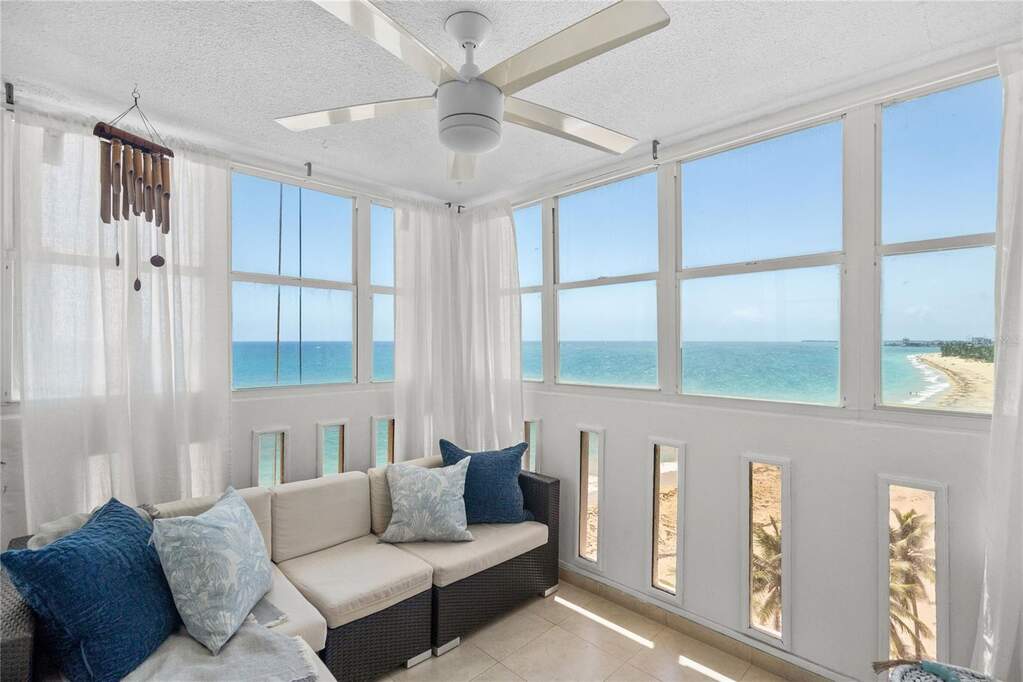
1479 Avenida Ashford Unit 802, San Juan, PR 00907
This furnished one-bedroom residence at Condado del Mar offers approximately 644 square feet, one parking space, ocean views, and direct beach access. The listing identifies short-term rental flexibility, which buyers should verify along with current association rules, fees, insurance, and partial-generator coverage.
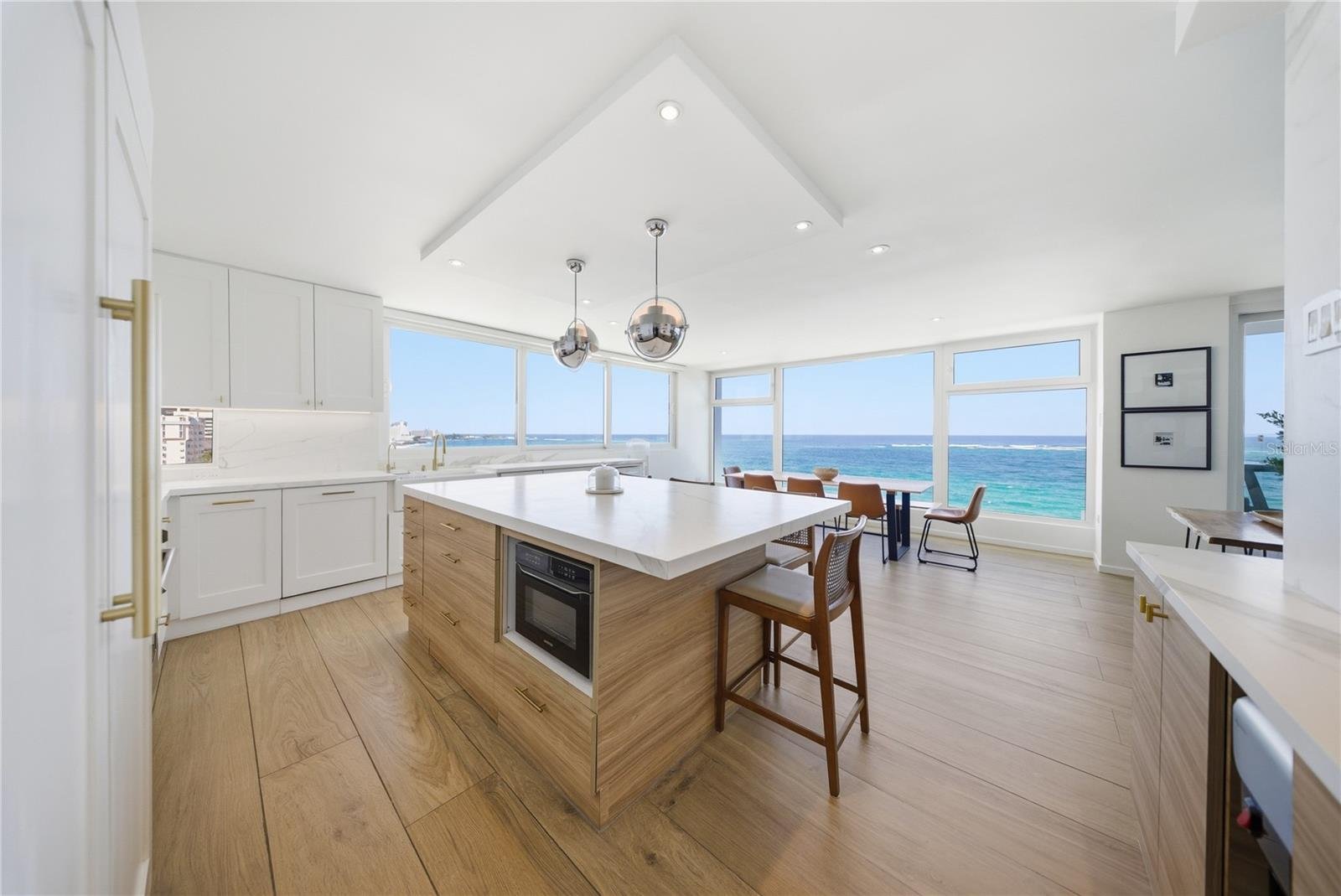
1 Cervantes #9 PH, San Juan, PR 00907
This furnished Condado penthouse is listed with four bedrooms, five bathrooms, approximately 3,200 square feet, two garage spaces, and beachfront positioning. Buyers should confirm current availability and review the building’s monthly association fee, master insurance, reserves, and rental rules.
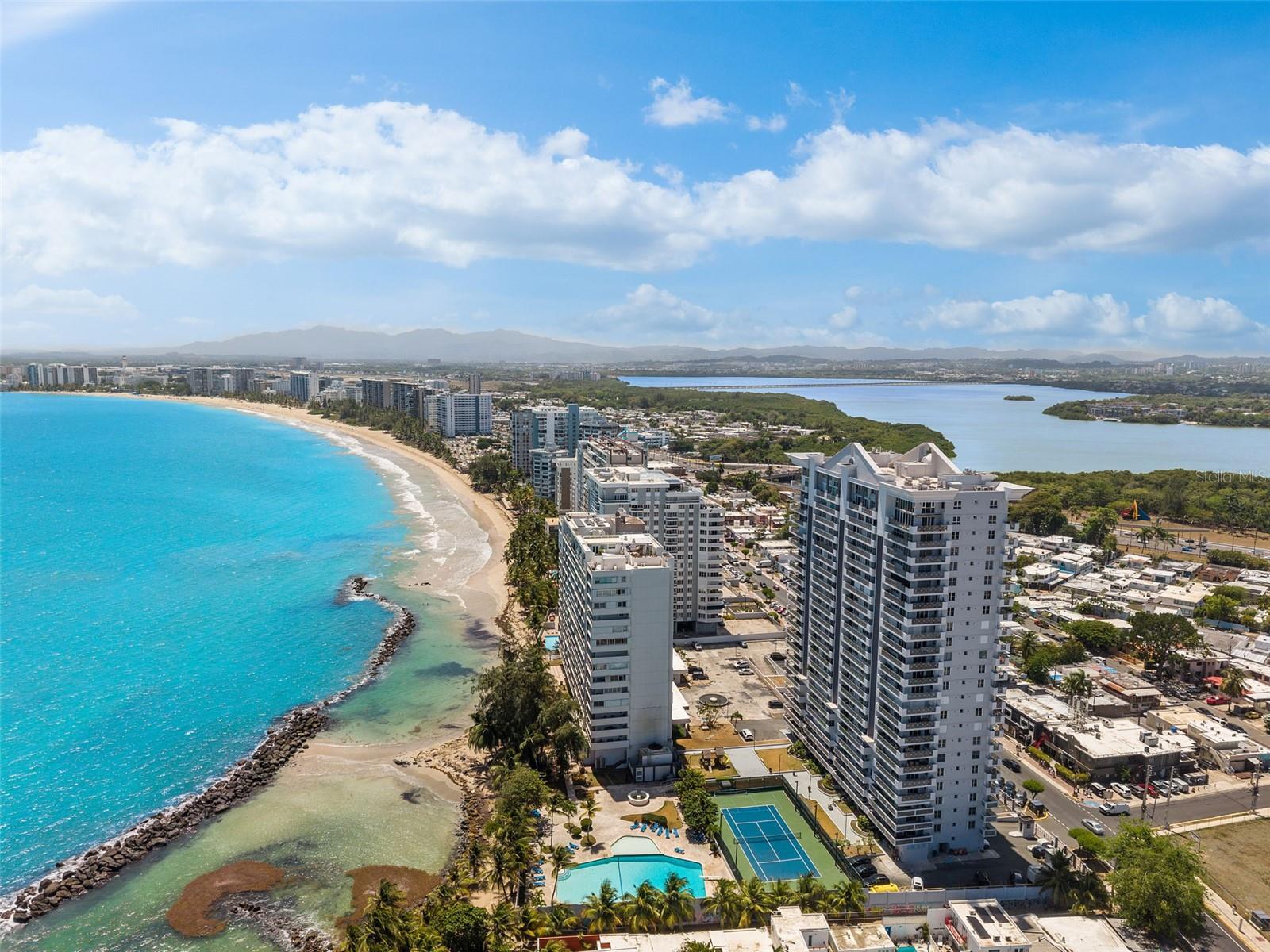
3001 Avenida Isla Verde #2204, Carolina, PR 00979
This high-floor corner condominium is presented with broad ocean, city, and sky views and a renovated interior. Confirm the listing’s current status, specifications, parking, fees, generator coverage, insurance, and permitted uses before relying on earlier marketing details.
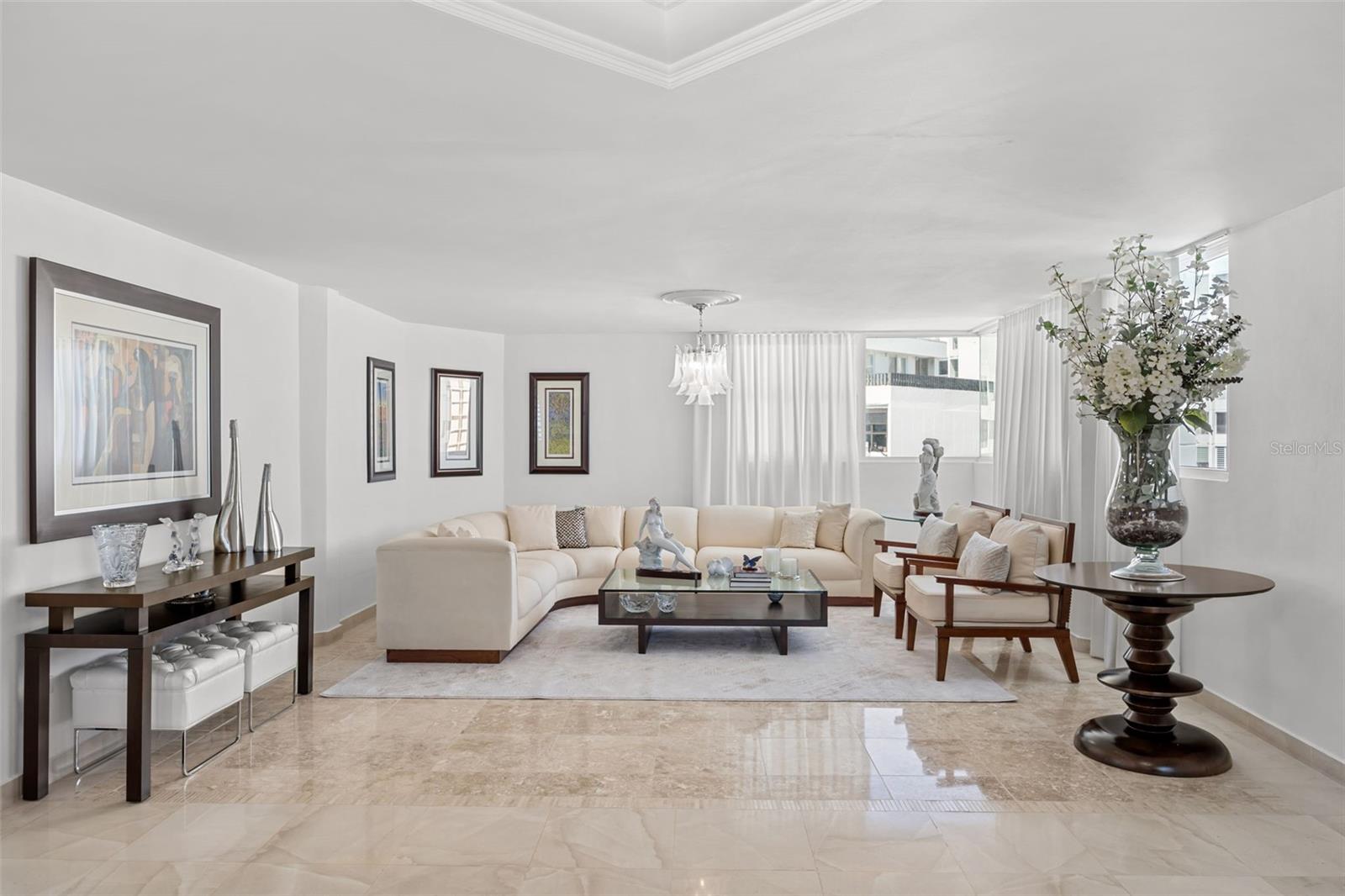
10 Rosa, Isla Verde #PH-5, Carolina, PR 00979
This active 2026 listing describes a four-bedroom, five-bathroom duplex penthouse with approximately 5,012 square feet in a boutique building near Isla Verde Beach. It also includes access to a rooftop terrace and pool; buyers should verify all amenities, association documents, insurance, and current terms.
Conclusion
Puerto Rico condos can offer convenient urban, coastal, or resort living, but the opportunity depends on the specific building and the buyer’s intended use. Compare recent closed sales, total monthly costs, association finances, insurance, infrastructure, legal use, and financing before deciding that a unit is affordable or investment-ready.
Christie’s International Real Estate Puerto Rico can help buyers review current condo inventory and identify the questions to take to lenders, inspectors, insurers, attorneys, tax advisors, and condominium administrators. Explore current Puerto Rico luxury properties for sale or contact the team for a property search aligned with your goals.
FAQs
Is buying a condo in Puerto Rico a good investment?
It can be suitable for some buyers, but no condo is automatically a good investment. Evaluate purchase price, comparable sales, fees, assessments, insurance, financing, legal rental use, realistic income and expenses, building condition, and resale demand.
Are Puerto Rico condos always less expensive than houses?
No. Some condos have lower purchase prices or exterior-maintenance responsibilities than comparable houses, while luxury, beachfront, and resort units may cost substantially more and carry significant monthly fees. Compare total ownership costs rather than property type alone.
Can I use a Puerto Rico condo as a short-term rental?
Only if the use is allowed by the property’s governing documents and all applicable laws, permits, registrations, insurance, and tax requirements. Rentals under 90 consecutive days generally trigger Puerto Rico Tourism Company registration and room-tax obligations.
Does buying property qualify me for Act 60 tax benefits?
No. Property ownership by itself does not create Act 60 eligibility. The program has separate categories, decree requirements, residency rules, and income-source limitations that should be reviewed with qualified tax and legal advisors.
What documents should I review before buying a condo?
Review the title and unit records, master deed, bylaws, budget, financial statements, insurance, meeting minutes, reserve information, assessment history, pending litigation, permits, rental restrictions, inspection results, and lender requirements.
What building systems matter most in Puerto Rico?
Confirm generator coverage, fuel arrangements, water storage, elevators, roof responsibility, windows and shutters, drainage, flood exposure, fire and access systems, insurance, and the maintenance history of common elements.