HB 505 became Act 38-2026 in March 2026, and it changes three things for anyone eyeing Puerto Rico's investor decree: the program's sunset moves from 2035 to 2055, applicants filing after December 31, 2026 face a 4% tax on dividends, interest, and most capital gains instead of 0%, and new applicants must clear a six-year non-Puerto Rico residency lookback plus register a primary residence within two years of getting their decree. Across Puerto Rico's luxury market, brokers are seeing buyers treat the property purchase and the decree application as a single linked decision, with the December 31, 2026 filing deadline pulling forward timelines that might otherwise stretch into next year.
This article maps the three paths in front of you now: locking in legacy Act 60 terms before year-end, entering under the new HB 505 structure, or deciding Puerto Rico isn't the right move at all.
Key Takeaways
HB 505 became Act 38-2026 in March 2026 and extended the program to 2055.
File by December 31, 2026 to lock in the legacy 0% rate through 2035.
Applications filed in 2027+ face a 4% rate, six-year residency lookback, and two-year primary residence rule.
Only post-residency appreciation qualifies — pre-move gains stay U.S.-taxable.
The right path depends on your gain profile and timeline.
How HB 505 Reshapes Act 60 for Investors
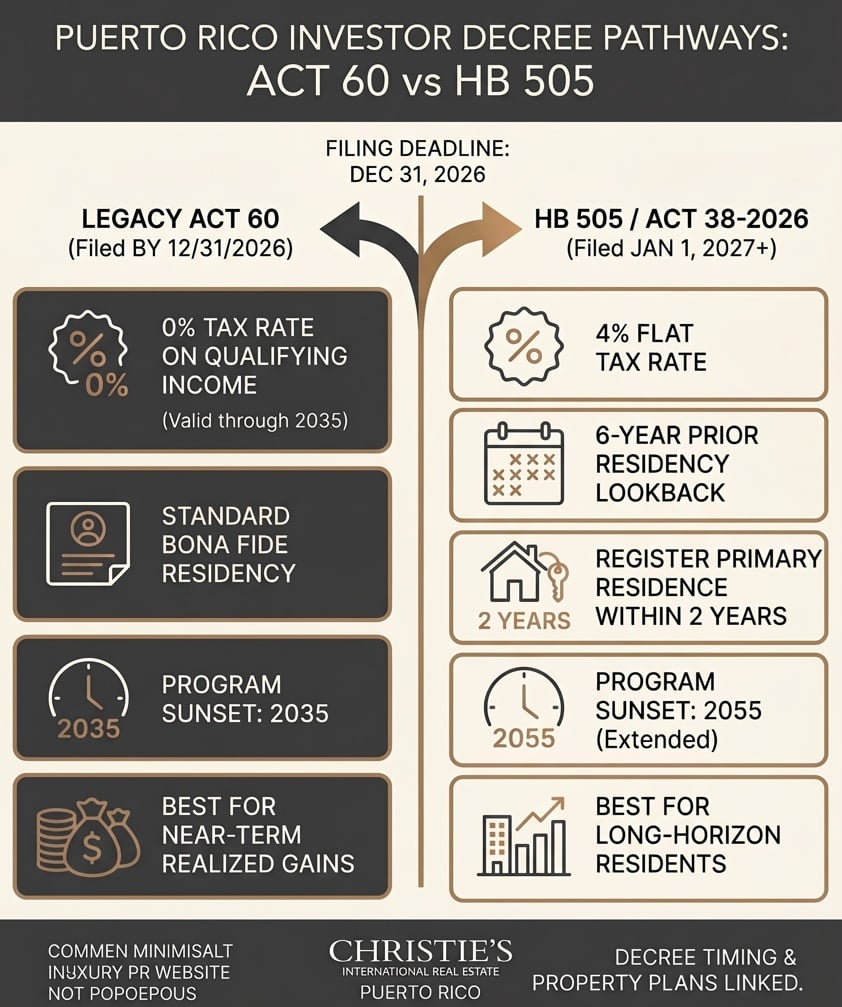
HB 505 does not kill the Act 60 investor decree, it splits it into two tracks based purely on when you file. Anyone who submits an application on or before December 31, 2026 keeps the original 0% treatment on qualifying dividends, interest, and capital gains, according to Hiltzik CPA's breakdown of the deadline. File on or after January 1, 2027 and that same income gets taxed at a flat 4%, as detailed in Procopio's analysis of the amendment. Bloomberg Tax's coverage of the shift from zero to low tax rate walks through the policy logic in more depth.
Tax advisors covering the amendment consistently make one point worth repeating: the 4% rate still beats most U.S. capital gains brackets, but the stricter eligibility rules signal the program is shifting away from short-term tax tourism and toward long-term residents with real ties to the island. That shift affects how buyers approach Dorado and other premier enclaves — in markets where a decree makes or breaks the underlying investment thesis, decree timing and property timing tend to be discussed together rather than treated as separate workstreams.
Transition to the first fork: whether legacy terms are still reachable before the deadline closes.
Act 60 vs Act 22: A Note on Terminology
Investors researching this topic often still search for Act 60 vs Act 22, but Act 22 was folded into Act 60 back in 2019 and no longer exists as a separate decree. HB 505 only touches the individual resident investor chapter of Act 60, meaning the export services and other business incentive chapters under Act 60 continue operating under their own separate rules.
If your Puerto Rico investment tax strategy involves both an operating business and personal investment income, it's worth reviewing each chapter with a local advisor rather than assuming one filing covers both.
Locking In Legacy Act 60 Before the December 31, 2026 Deadline

Filing before year-end preserves the 0% rate through 2035, but it only makes sense if you can actually meet the bona fide residency test in time and you have future gains large enough to justify the move. A 2026 BiggerPockets thread describes a split among active investors: some are rushing paperwork to lock in old terms before the window shuts, while others have already accepted the 4% future rate because their business income and real estate deals still work under the new math.
Why the Rush Makes Sense for Some
Investors with large embedded gains expected to realize in the next several years get the most value from 0% versus 4%, since the spread compounds fast at higher dollar amounts.
Locking in before 2027 avoids the six-year non-Puerto Rico residency lookback entirely, which matters for anyone who spent time on the island recently for work or family.
Buyers who plan to hold Puerto Rico real estate long-term, in Dorado or Palmas del Mar for example, benefit from pairing the decree timeline with a property purchase that also builds local ties.
What Still Has to Be Proven
Filing paperwork by the deadline does not by itself satisfy Puerto Rico tax residency requirements. You still need the 183-day presence test, a closer-connection showing, and Puerto Rico-source income documentation, and a CPA familiar with Act 60 requirements should review this well before the filing date, not after.
For buyers pursuing a purchase in Condado or Dorado while their decree application is in process, having the residency documentation lined up before serious house-hunting begins tends to compress the closing timeline meaningfully.
Entering Under HB 505 and Act 38-2026 Rules
Filing after January 1, 2027 still delivers a meaningful tax advantage at 4%, but it comes with real eligibility hurdles that did not exist under the original Act 60 investor decree. The six-year lookback and the two-year primary residence registration turn this into a program built for people making a genuine, long-term move rather than a quick tax play. For the legislative summary, see the bill analysis PDF.
The Six-Year Lookback
If you've spent meaningful time in Puerto Rico over the past six years, even for extended winters or remote work stints, you may not qualify as a new applicant under the revised rules described by Hiltzik CPA's Chapter 2 guide. This closes a loophole where people bounced on and off the island to reset their eligibility clock.
Primary Residence Registration
New decree holders must register a Puerto Rico primary residence in the Property Registry within two years. That requirement pushes the decision toward buying rather than renting indefinitely, which reshapes the "lease for a year or two before committing" plan that many relocators previously used to test-drive Old San Juan or Condado.
Locals and transplants weighing in on the r/PuertoRico update thread generally agree the 4% rate keeps Puerto Rico competitive against most mainland alternatives, but they're clear that the program now favors people building an actual life on the island over those chasing a Puerto Rico investor tax incentive with no other ties here.
Skipping Puerto Rico Entirely

For some investors, the smartest move under HB 505 is no move at all. A detailed r/fatFIRE thread walks through the mechanics: you have to effectively pay the toll on embedded gains before Puerto Rico treatment applies, since only appreciation earned after establishing residency qualifies, and several posters concluded the program only pencils out for people with very large future upside rather than gains already sitting on the books.
A widely referenced r/ExpatFIRE post makes the same point from the FIRE community's angle: HB 505 extends the sunset and adds the 4% rate, but pre-move appreciation remains fully taxable in the U.S. regardless of your Puerto Rico decree status. That single fact reshapes the Puerto Rico FIRE and ExpatFIRE calculus for anyone assuming the island erases capital gains retroactively.
Financial Reasons the Math Doesn’t Work
Already-realized gains get no benefit from either the 4% or the legacy 0% rate — neither applies retroactively.
Compliance costs (residency documentation, primary residence registration, annual filings) add real overhead that erodes the tax savings on smaller portfolios.
Non-Financial Reasons Investors Stay Put
A 2023 BiggerPockets post notes social friction toward decree holders in some neighborhoods, describing prospective buyers who backed out after weighing the local backlash against "tax refugees."
Lifestyle mismatch, hurricane exposure, and distance from family or business networks push others toward mainland-based strategies.
Buyers touring beachfront listings in Rincón or Luquillo who raise these concerns usually aren't wrong to weigh them. Well-qualified buyers do sometimes step back from a purchase after concluding that the compliance burden outweighs the tax upside for their specific income mix, and that is a legitimate outcome rather than a failed transaction.
Puerto Rico Luxury Properties for Sale
Whichever fork you take on the Act 60 decision, the real estate side of the move deserves the same level of scrutiny. Christie's International Real Estate Puerto Rico works with investors relocating under legacy Act 60 terms, new HB 505 applicants, and buyers who simply want a Puerto Rico luxury home regardless of tax timing. Below are four current luxury properties for sale across the island's most established and emerging markets, each suited to a different type of buyer profile.
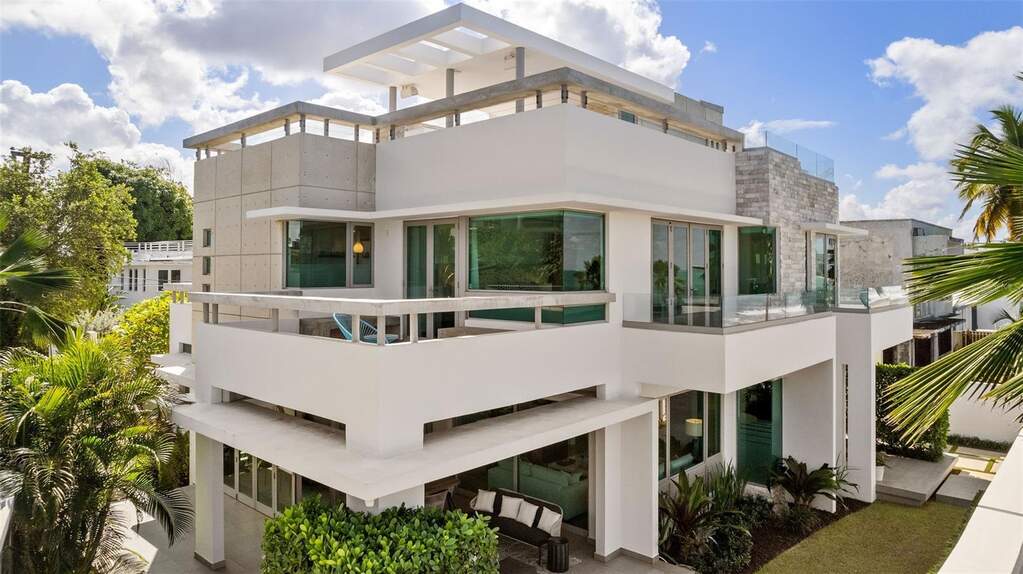
2220 Park Boulevard, San Juan, PR 00913
This Ocean Park property sits steps from the sand in one of San Juan's most walkable beachfront pockets. See the full listing at 2220 Park Boulevard for layout and pricing details.
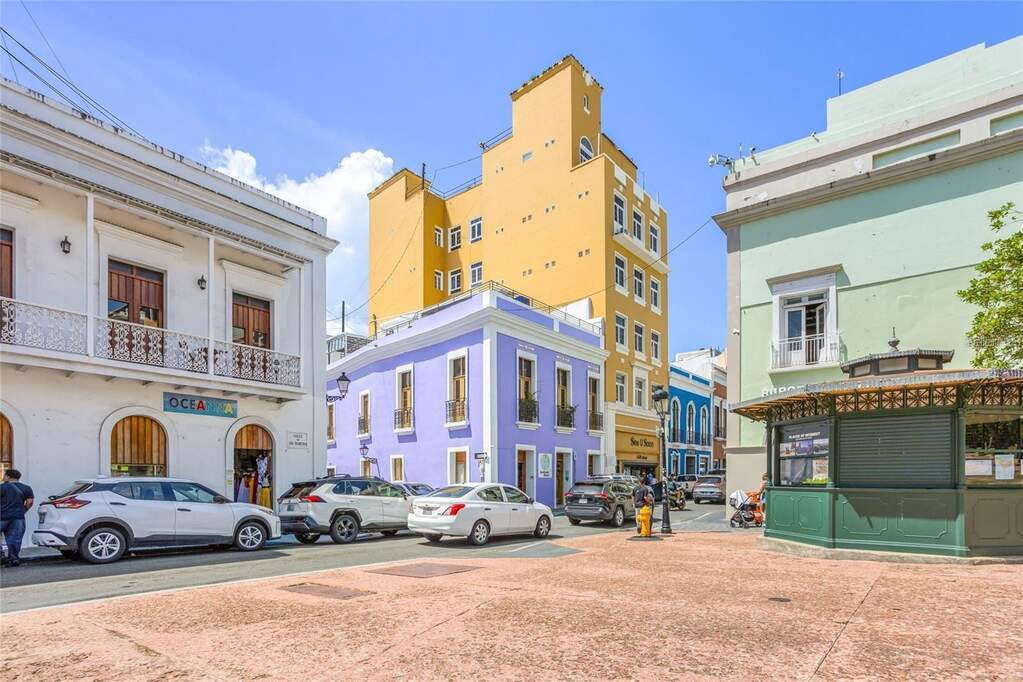
266 San Francisco Unit: 266, San Juan, PR 00901
Located in the heart of Old San Juan, this residence puts buyers inside the historic district's cobblestone streets and colonial architecture. Full details are available at 266 San Francisco.

PR 413 Solar C Bo. Puntas, Rincón, PR 00677
This Rincón parcel sits in a surf town known for sunset views and a slower pace than the metro area. Review the listing at PR 413 Solar C, Bo. Puntas for lot specifications.
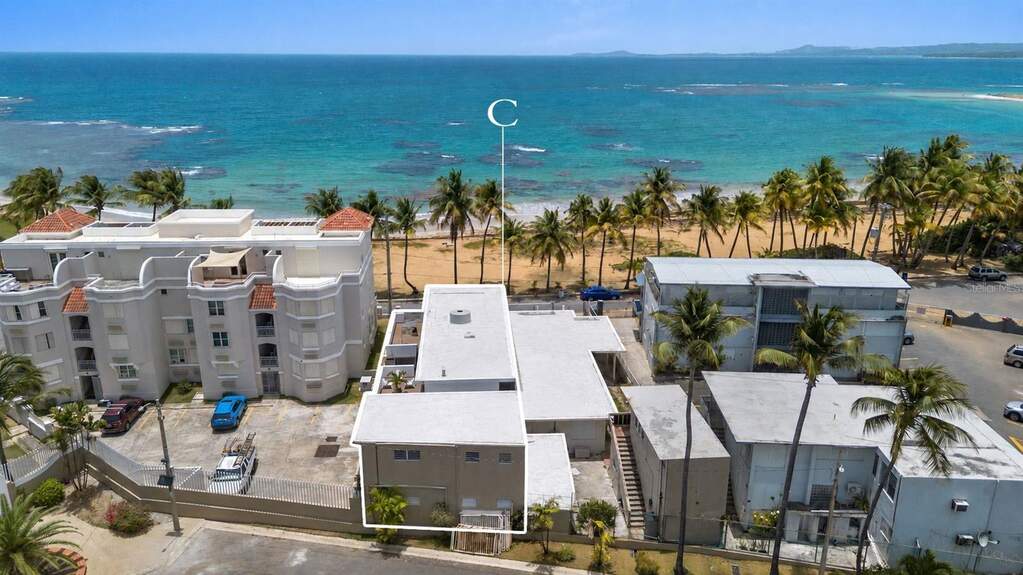
Luquillo Beach Unit: A-25, Luquillo, PR 00773
Set on the northeast coast near El Yunque rainforest, this beachfront unit appeals to buyers wanting proximity to nature alongside ocean access. Details are posted at Luquillo Beach Unit A-25.
Browse more Puerto Rico luxury real estate on our resources page or learn how the firm approaches representation on our advantage.
Conclusion
The fork HB 505 created is between three legitimate strategies that suit different financial pictures and timelines, not between good and bad options. Investors with large near-term gains generally benefit from filing before the December 31, 2026 deadline, those building long-term Puerto Rico ties can still make the 4% structure work, and investors without meaningful future upside may be better served staying put. Whichever path fits, pairing the decree decision with the right property purchase is what turns a tax strategy into an actual life on the island.
Christie's International Real Estate Puerto Rico represents buyers, sellers, and renters across the island's most sought-after luxury properties in Puerto Rico, from Dorado and Bahia Beach to Condado, Palmas del Mar, Rincón, and Old San Juan. Whether you're timing a purchase around your Act 60 filing, listing a beachfront home, or securing a rental while your decree is in process, our team brings the market knowledge and global Christie's network that high-net-worth clients expect. Reach out through our contact page to start the conversation.
FAQs
Does buying a home in Puerto Rico automatically qualify me for an investor decree?
No. A purchase can support your “closer connection” to Puerto Rico, but eligibility is determined by your decree application and meeting Puerto Rico’s bona fide residency requirements—not by owning real estate alone.
What happens if I file by December 31, 2026 but don’t complete my move until later?
If you can't substantiate bona fide Puerto Rico tax residency (and related documentation) for the years you claim the benefit, the incentive can be challenged even if the application was submitted before the deadline. The IRS residency framework is set out in Publication 570.
How does the new primary-residence registration requirement affect renters?
It can compress the timeline for “try-before-you-buy” plans. Post-2026 applicants who start by renting should plan early for how they will satisfy the two-year primary-residence registration rule if they decide to proceed under the new track.
Related Articles:
- Buying in a New Climate: What the Roof Is Telling You in Puerto Rico
- Building a Global Network from Puerto Rico: Strategies for Brokers and Developers Connecting with Capital in London and Beyond
- Protecting Luxury Homes Starts at the Top: Why Roof Maintenance Matters