Puerto Rico’s former Act 22 investor program was consolidated into Act 60, the Puerto Rico Incentives Code, in 2019. The Resident Individual Investor provisions still offer preferential Puerto Rico tax treatment for qualifying income, but eligibility, sourcing, residency, reporting, donation, and property-purchase rules must all be considered together. This guide explains how Act 22 became Act 60, what changed in 2026, and what prospective applicants should verify before relocating or buying a home.
Key Takeaways
- Act 22 was consolidated into Act 60 rather than simply renamed, and each investor’s decree and application date remain important.
- Applications filed on or before December 31, 2026, may qualify for the existing exemption framework, while applications filed from January 1, 2027, are generally subject to a 4% Puerto Rico rate on qualifying interest, dividends, and specified capital gains.
- Resident Individual Investors generally must buy a principal residence in Puerto Rico within two years after a decree is granted, file annual reports, pay the applicable annual fee, and satisfy the annual charitable-donation requirement.
- Act 60 does not automatically eliminate U.S. federal tax or exempt a home from Puerto Rico property tax.
- Tax treatment depends on bona fide residency, income sourcing, when appreciation accrued, the decree’s terms, and current Puerto Rico and federal law.
Why Act 22 Was Consolidated into Act 60

Puerto Rico enacted Act 60 of 2019 to consolidate numerous incentive statutes into one code. The former Act 22 program became the Resident Individual Investor incentive within that broader framework, while former Act 20 export-services incentives were organized separately. Consolidation standardized administration, application procedures, reporting, and compliance across incentive programs.
The change did not make every older decree identical to a newer Act 60 decree. Existing beneficiaries should review the language and term of their own decree, and prospective applicants should use the rules in effect on the date of application. The official Puerto Rico Incentives Code is the primary reference for the current statutory requirements.
Core Tax Benefits and Their Limits
Act 60 can provide preferential Puerto Rico tax treatment for qualifying investment income and capital gains. These benefits are not automatic: the taxpayer must qualify for and maintain a decree, establish bona fide Puerto Rico residency, satisfy the applicable sourcing rules, and remain compliant.
Puerto Rico Capital Gains Tax Treatment
The Puerto Rico capital gains tax rules are a central part of the Resident Individual Investor program. Under the pre-2027 framework, qualifying post-residency gains may receive a full Puerto Rico income-tax exemption through the applicable decree term. Act 38 of 2026 created a 4% Puerto Rico rate for specified qualifying gains under the framework applicable to applications filed on or after January 1, 2027; the exact result still depends on the asset, acquisition date, holding period, sourcing rules, and decree terms.
Appreciation that accrued before an individual became a bona fide Puerto Rico resident can be treated differently from appreciation arising afterward. U.S. citizens also remain subject to federal rules, including special sourcing provisions for certain investment property. The IRS Publication 570 explains the federal bona fide residency and income-sourcing framework, while the official Act 38 of 2026 describes the recent Puerto Rico rate changes.
Interest and Dividend Income
For qualifying applicants under the framework available through December 31, 2026, eligible Puerto Rico-source interest and dividends may receive a 100% Puerto Rico income-tax exemption during the decree term. For applications filed on or after January 1, 2027, Act 38 of 2026 generally applies a 4% preferential Puerto Rico rate to qualifying interest and dividend income through December 31, 2055.
The source and character of income matter. An Act 60 decree should not be treated as a blanket exemption for every distribution, investment return, or item of worldwide income, so coordinated Puerto Rico and U.S. tax advice is important before changing residency or realizing gains.
Property Taxes Are Separate from Act 60
The Resident Individual Investor incentive requires a qualifying principal residence, but it does not create an automatic property-tax exemption for that home. Puerto Rico real-property taxes are administered separately through the Municipal Revenue Collections Center, commonly known as CRIM. Buyers should verify the property’s tax status, assessed value, exemptions, and any outstanding balances during due diligence rather than assuming that an Act 60 decree changes those obligations.
Major Requirements Under Act 60
Act 60 pairs preferential tax treatment with continuing residency, charitable, filing, fee, and property requirements. Missing an obligation can lead to penalties, deficiency notices, or possible decree revocation.
Annual Charitable Donation
Resident Individual Investors are generally required to donate at least $10,000 each year to qualifying Puerto Rico nonprofit organizations. At least $5,000 must go to an organization included on the government’s approved list that works to address child poverty, with the balance donated as permitted under the Incentives Code. Donation receipts and evidence of the recipient organization’s eligibility should be retained with the investor’s annual compliance records.
Bona Fide Residency and Documentation
A decree alone does not establish bona fide Puerto Rico residency for federal tax purposes. In general, the federal test considers physical presence, whether the individual has a tax home outside Puerto Rico, and whether the individual has a closer connection to the United States or another foreign country. Travel records, homes, family and business connections, voter registration, licenses, financial activity, and other facts can all be relevant depending on the test being applied.
Puerto Rico also requires annual decree compliance reporting. DDEC has increased decree oversight and may issue deficiency notices, impose penalties, or pursue revocation when beneficiaries do not meet their obligations. Applicants and decree holders should maintain contemporaneous records rather than trying to reconstruct residency or compliance after an audit.
Eligibility Look-Back Rule
The current Incentives Code does not use a rolling six-year look-back for this program. Its statutory definition generally requires a Resident Individual Investor not to have been a Puerto Rico resident between January 17, 2006, and January 17, 2012, and to become a Puerto Rico resident no later than the tax year ending December 31, 2055. Individual eligibility can involve additional facts, so prior Puerto Rico residents should obtain advice based on their specific residency history.
2026 and 2027 Timeline Changes

Application framework | Qualifying Puerto Rico interest and dividends | Specified qualifying gains | General benefit horizon |
|---|---|---|---|
Original Act 22 decrees | Generally governed by the decree and the law under which it was issued | Pre- and post-residency appreciation may receive different treatment | Review the individual decree |
Act 60 applications filed through December 31, 2026 | Potential 100% Puerto Rico exemption when all requirements are met | Potential Puerto Rico exemption for qualifying post-residency gains; special rules apply to pre-residency appreciation | Generally through December 31, 2035, subject to the decree and law |
Act 60 applications filed from January 1, 2027 | Generally 4% Puerto Rico tax on qualifying income | Generally 4% Puerto Rico tax under the applicable amended provisions | Generally through December 31, 2055, subject to the decree and law |
Application timing can materially affect the available Puerto Rico rate, but filing before a deadline does not guarantee approval or a particular tax result. Applicants must still satisfy eligibility, residency, sourcing, property, donation, reporting, and other decree requirements. Anyone considering a 2026 application should rely on current professional advice and official filing guidance rather than acting solely because of the rate change.
Compliance and Administrative Requirements
Act 60 compliance continues after a decree is issued. The annual report, filing fee, donation evidence, residence ownership, and bona fide residency records should be coordinated rather than handled as unrelated tasks.
Annual Reports and Fees
Resident Individual Investors generally must submit an annual report and pay the statutory $5,000 annual filing fee. The report documents continued compliance with the decree and Incentives Code, including the required charitable contribution and other information requested by the government. Late, incomplete, or inaccurate filings can expose a decree holder to penalties and enforcement action.
Principal Residence Purchase
A Resident Individual Investor generally must purchase a principal residence in Puerto Rico within two years after the decree is granted. The current Incentives Code states that the residence must be owned solely by the investor or jointly with the investor’s spouse and maintained as the principal residence throughout the decree’s term. Because title structure is part of compliance, buyers should obtain legal and tax advice before placing the residence in an entity, trust, or other ownership vehicle.
Investment and Business Income Classification
The Resident Individual Investor incentive is designed for qualifying investment income, not as a universal exemption for active business earnings. Compensation, service income, business profits, partnership distributions, dividends, interest, and capital gains can be classified and sourced differently. Investors who own or operate businesses should confirm whether a separate Act 60 chapter or ordinary Puerto Rico tax treatment applies.
Act 22 vs. Act 60: Practical Comparison
Issue | Original Act 22 | Current Act 60 framework |
|---|---|---|
Program structure | Standalone resident-investor statute | Resident Individual Investor provisions within the consolidated Incentives Code |
Annual charitable donation | Not part of the original statute | Generally $10,000, subject to statutory allocation rules |
Annual report fee | Depends on the governing decree and later requirements | Generally $5,000 under the current code |
Principal residence | Review the governing decree and applicable amendments | Purchase generally required within two years after the decree is granted |
Rate for applications from 2027 | Not applicable | Generally 4% on qualifying interest, dividends, and specified gains |
Controlling documents | Individual decree plus applicable law | Individual decree, Act 60 as amended, regulations, and administrative guidance |
Impact on Puerto Rico Real Estate Decisions
The principal-residence requirement makes real estate planning an important part of Act 60 compliance, but it should not be confused with proof that the incentive alone determines market prices. Buyers still need to evaluate location, insurance, flood and wind exposure, title, permitting, condominium or homeowners-association obligations, utilities, financing, and resale considerations. The property should work as a genuine principal home as well as fit the investor’s broader financial plan.
Choosing a Principal Residence
Dorado, Condado, Old San Juan, Palmas del Mar, Rincón, and other established markets offer different combinations of amenities, security, beach access, walkability, community rules, and maintenance obligations. Inventory and pricing vary significantly by property type and location. An Act 60 buyer should verify that the intended ownership and occupancy structure satisfies the decree while completing the same legal and physical due diligence expected in any Puerto Rico luxury-property purchase.
Coordinating Tax and Investment Timing
The 2027 rate change may influence when an eligible investor applies, relocates, acquires a residence, or realizes a gain. Those decisions should be modeled together because an application date, decree date, residency start date, asset basis, appreciation period, and income source can affect the result. A real estate transaction should not be accelerated solely to pursue a tax outcome that has not been confirmed for the buyer’s circumstances.
What the Changes Mean for Different Investor Groups
The transition from Act 22 to Act 60 does not affect every investor in the same way. The governing decree, application date, residency history, income profile, and compliance record determine which provisions require the closest review.
Existing Act 22 Decree Holders
Existing decree holders should not assume that every later Act 60 amendment automatically replaces the terms of an older decree. The original decree, subsequent legislation, administrative guidance, and any accepted amendment or renegotiation must be reviewed together. Annual compliance obligations and the treatment of gains should be confirmed before a major transaction.
Applicants Filing Through December 31, 2026
Eligible applicants who file by the end of 2026 may seek the exemption framework available before the new 4% regime begins. Filing is only one step: the applicant must qualify, receive a decree, establish bona fide residency, comply with the principal-residence requirement, and satisfy ongoing obligations. The potential benefit should be compared with relocation, professional, donation, housing, insurance, and compliance costs.
Applicants Filing in 2027 and Later
Applications filed from January 1, 2027, generally fall under the 4% Puerto Rico rate introduced by Act 38 of 2026 for qualifying interest, dividends, and specified gains. The longer statutory horizon through 2055 may support long-range planning, but it does not remove federal tax, residency, sourcing, or compliance analysis. Future applicants should confirm the rules and administrative procedures in effect when they file.
Puerto Rico Luxury Properties for Sale
The principal-residence requirement makes the home search a practical part of planning for many Resident Individual Investors. These luxury properties for sale in Puerto Rico illustrate several distinct island lifestyles, from resort living and beach access to urban and historic settings. Each buyer should independently confirm that the selected property, title structure, and intended use fit the requirements of the buyer’s decree and professional advice.
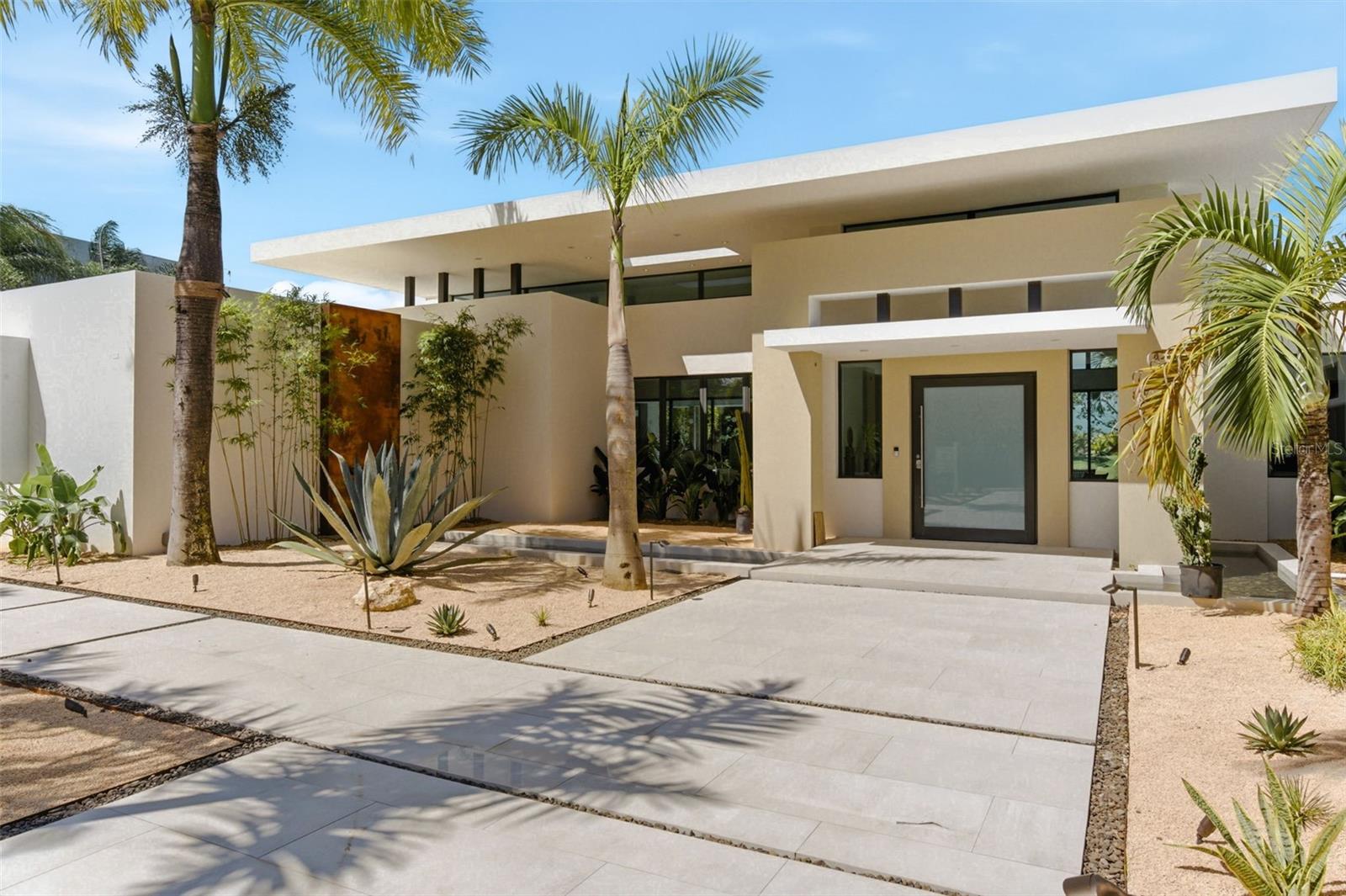
11 Golf View Drive, Dorado PR 00646
This five-bedroom, six-bath residence in Dorado Beach offers approximately 5,172 square feet, golf and lake views, an infinity pool, and indoor-outdoor living areas. Its resort-community setting may appeal to buyers seeking a principal residence with access to established luxury amenities.
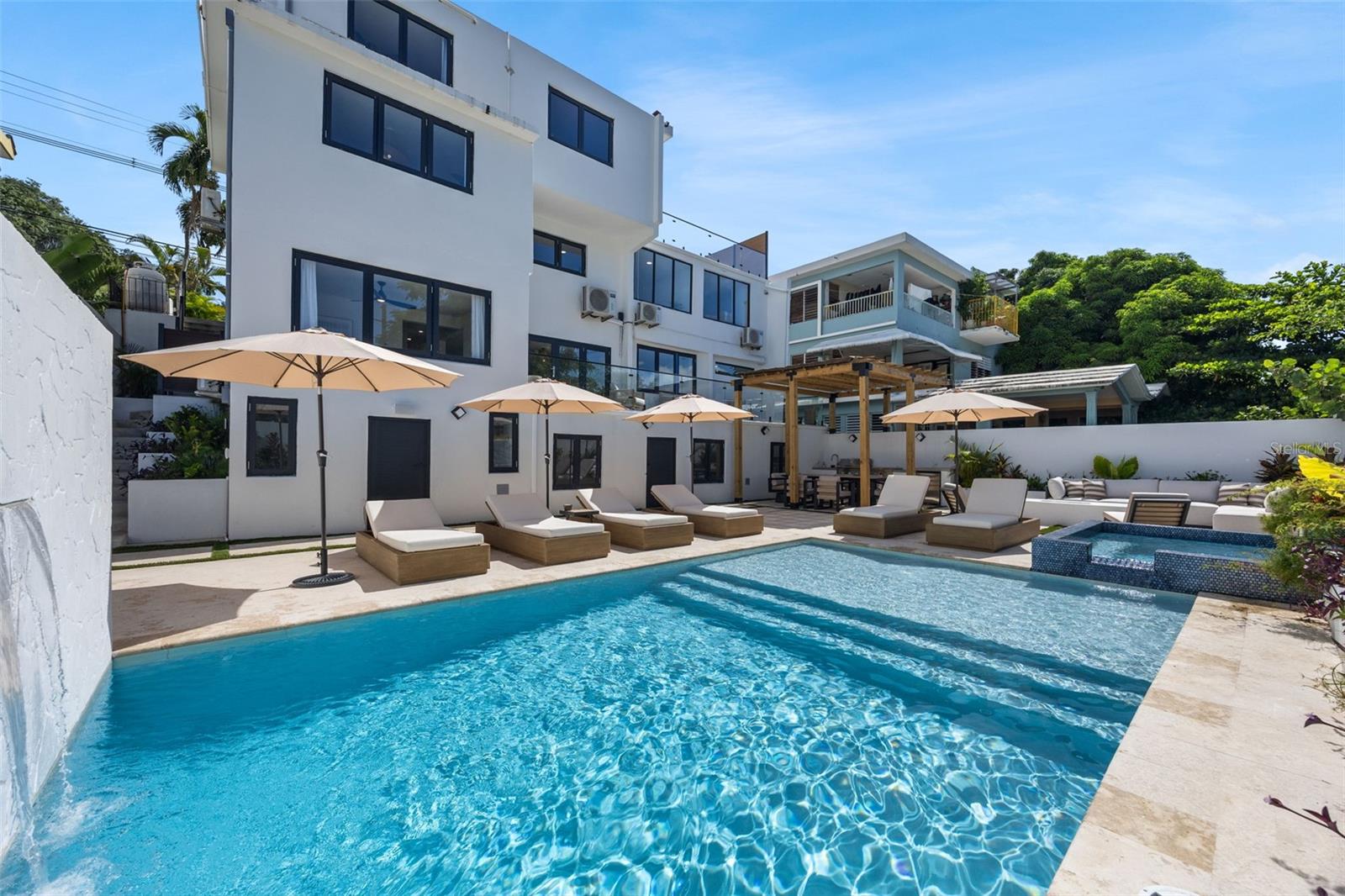
413 Road, Rincón PR 00677
Located about 100 yards from the beach in Rincón, this active listing includes two residences with six bedrooms, five bathrooms, and approximately 3,750 square feet. A pool, hot tub, outdoor kitchen, and backup generator support both daily living and entertaining.

1507 Mirsonia, San Juan PR 00907
Steps from the beach in Condado, this three-level residence offers nine bedrooms, eleven bathrooms, and approximately 6,500 square feet. The property also includes a separate casita and rooftop terrace in one of San Juan’s most walkable coastal neighborhoods.

152 San Justo St, San Juan PR 00901
This Old San Juan property provides ten bedrooms, ten bathrooms, and approximately 10,800 square feet across a historic multi-unit building. Its location places residents near the district’s architecture, restaurants, plazas, and cultural landmarks.
Conclusion
Act 60 preserved important elements of Puerto Rico’s resident-investor incentive while adding and refining meaningful compliance obligations. Act 38 of 2026 created a different rate framework for applications filed from 2027, making application timing relevant but not decisive on its own. A sound plan should coordinate Puerto Rico tax law, federal residency and sourcing rules, decree compliance, and the purchase of a genuine principal residence.
This article provides general information and is not individualized legal, tax, or investment advice. Prospective and current decree holders should consult qualified Puerto Rico and U.S. tax and legal professionals before applying, relocating, changing an ownership structure, or realizing gains.
For buyers, sellers, or renters exploring Puerto Rico luxury properties, Christie’s International Real Estate Puerto Rico can help evaluate homes across the island’s leading residential markets. Connect with our team for property guidance that complements, but does not replace, independent tax and legal advice.
FAQs
Does an Act 60 decree eliminate U.S. federal taxes for U.S. citizens?
No. Federal treatment depends on bona fide Puerto Rico residency, the source and type of income, and special rules that may apply to pre-move appreciation or investment property. A Puerto Rico exemption does not automatically create an equivalent federal exemption.
What are the main annual obligations for a Resident Individual Investor?
Current law generally requires continued bona fide residency, an annual compliance report, a $5,000 filing fee, and at least $10,000 in qualifying charitable donations. The investor must also maintain the required principal residence and comply with the terms of the individual decree.
What can happen if a decree holder misses a compliance requirement?
DDEC may issue a deficiency notice, assess penalties, or pursue suspension or revocation depending on the requirement and circumstances. Decree holders should address a missed filing, fee, donation, or documentation issue promptly with qualified advisers rather than assume it can be corrected later without consequence.
Does Act 60 automatically exempt a principal residence from Puerto Rico property tax?
No. The home-purchase requirement and CRIM property-tax treatment are separate matters. Buyers should verify the property’s tax account, assessment, available exemptions, and outstanding balances during due diligence.
How soon must an investor buy a principal residence?
The current Incentives Code generally requires the purchase within two years after the Resident Individual Investor decree is granted. Because closing, title review, financing, insurance, and community approvals can take time, buyers often begin evaluating suitable properties before that deadline approaches.
What changes for applications filed in 2027?
Under Act 38 of 2026, applications filed on or after January 1, 2027, generally fall under a 4% Puerto Rico rate for qualifying interest, dividends, and specified gains rather than the earlier full-exemption framework. Eligibility, sourcing, residency, reporting, donation, and property requirements still apply.