Puerto Rico is a U.S. territory, so a nonstop trip from a U.S. state or another U.S. jurisdiction is generally treated as domestic travel. TPS and DACA recipients can often fly to Puerto Rico without the authorization required for a trip outside the United States, but travelers should confirm that their status and documents are current and review any individual immigration risks before departure.
This guide explains the practical distinction between domestic and international travel, the documents to carry, and why Act 60 tax residency does not create immigration status. It provides general information and is not legal advice; anyone with a removal order, prior departure, criminal history, expired documentation, or a pending immigration matter should consult a qualified immigration attorney before traveling.
Key Takeaways
- A direct flight between a U.S. jurisdiction and Puerto Rico normally remains within the United States.
- DACA recipients generally do not need advance parole for that domestic itinerary, but international travel requires prior authorization.
- TPS holders generally do not need Form I-512T for a domestic Puerto Rico itinerary, while travel outside the United States requires approved TPS travel authorization.
- Travelers age 18 or older must present identification accepted by TSA and should carry current immigration documents.
- Act 60 and federal bona fide residency rules concern taxes; they do not grant permission to enter, live, or work in the United States.
Is Puerto Rico Domestic Travel for Immigration Purposes?

Puerto Rico is part of the United States for immigration purposes. A direct flight from a U.S. state to Puerto Rico is therefore different from departing for a foreign country, although federal officers may still conduct lawful identity or immigration-related checks.
U.S. Customs and Border Protection guidance specifically describes travel to Puerto Rico and other U.S. territories as similar to travel among the 50 states. The safest itinerary is a nonstop or wholly domestic route that does not connect through a foreign airport.
Domestic Travel Does Not Eliminate Individual Risk
A domestic itinerary does not resolve every immigration issue. A traveler with an outstanding removal order, expired status, a history of unlawful departures, pending proceedings, or other complications should obtain case-specific advice before flying.
Can DACA Recipients Travel to Puerto Rico?
In general, a person with current DACA can travel directly from a U.S. jurisdiction to Puerto Rico without advance parole because the trip does not leave the United States. The traveler should carry valid TSA-accepted identification and evidence of current DACA, such as an unexpired Employment Authorization Document and the latest approval notice.
Advance parole becomes relevant when a DACA recipient plans to travel outside the United States. USCIS Form I-131 instructions warn that departure without the required authorization can have serious consequences, and an approval does not guarantee admission after foreign travel.
Before a DACA Recipient Flies
- Confirm that DACA and the Employment Authorization Document remain valid through the return date.
- Use an itinerary that does not pass through a foreign country.
- Carry copies of the latest DACA approval notice and other relevant immigration records.
- Seek legal advice before travel if there is a removal order, court case, arrest history, or prior departure from the United States.
Can TPS Holders Travel to Puerto Rico?
A direct domestic trip to Puerto Rico ordinarily does not require TPS travel authorization because the traveler is not leaving the United States. TPS holders should still confirm that their country designation, individual TPS, Employment Authorization Document, and any automatic extension are current before traveling.
Travel outside the United States is different. USCIS uses Form I-512T for approved TPS travel authorization, and returning travelers remain subject to inspection and the terms of that authorization.
Before a TPS Holder Flies
- Carry TSA-accepted identification and evidence of current TPS or an applicable automatic extension.
- Avoid itineraries with foreign connections unless approved travel authorization covers the trip.
- Review current USCIS notices for the applicable TPS-designated country.
- Ask an immigration attorney to assess any removal order, inadmissibility concern, pending case, or unusual travel history.
Documents to Carry for Puerto Rico Travel
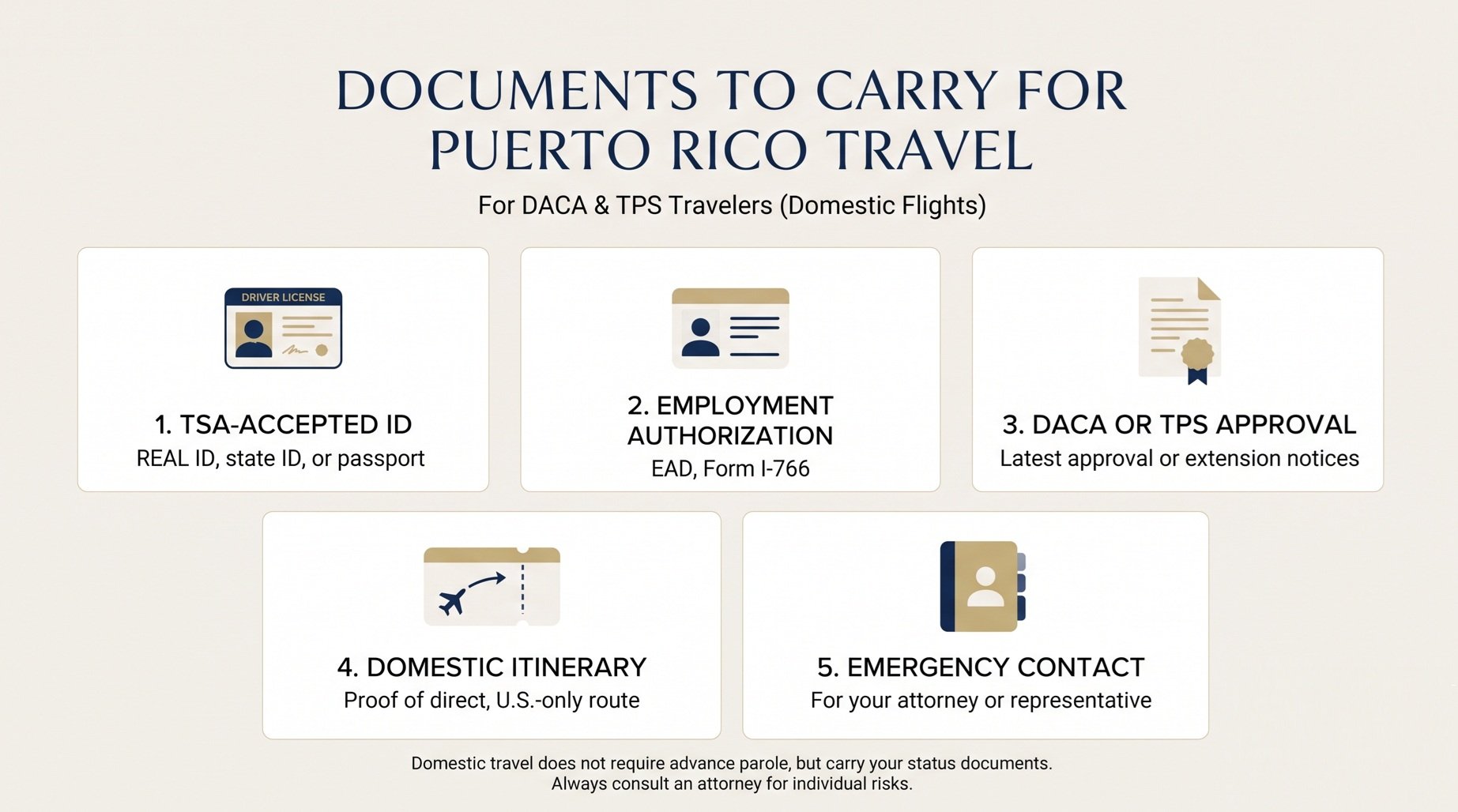
TSA identity screening and immigration status are separate questions. Travelers should carry identification accepted at the airport checkpoint plus documents that show their current DACA or TPS position if a federal officer asks for them.
- An unexpired Employment Authorization Document, Form I-766, when available.
- A REAL ID-compliant state driver’s license or identification card, U.S. passport, foreign passport, or another document on the TSA acceptable-identification list.
- The latest DACA or TPS approval notice and any official automatic-extension notice that applies.
- A copy of the itinerary showing that the route remains within the United States.
- Emergency contact information for an immigration attorney or accredited representative when individual risks exist.
REAL ID enforcement began on May 7, 2025, for state-issued licenses and identification cards used at TSA checkpoints. A traveler who uses another TSA-accepted document, such as an unexpired Employment Authorization Document, should review the current TSA list before departure because document rules can change.
Travel Risks to Review Before Flying
The legal character of a trip depends on the actual itinerary and the traveler’s circumstances, not only the destination printed on a reservation. A connection, diversion, or separate excursion outside U.S. territory can create an international-travel issue.
Foreign Connections or Side Trips
Do not assume a route is domestic if it connects through another country or includes a cruise or excursion that enters foreign territory. Confirm every segment and obtain the appropriate authorization before any departure from the United States.
Expired or Extended Documents
An automatic extension may preserve employment authorization or TPS for a defined period, but airport personnel may need the related Federal Register or USCIS notice to understand it. Print the current notice and verify dates before traveling.
Removal Orders and Pending Proceedings
Travel can carry additional consequences for people with removal orders or active court matters. General online guidance cannot determine that risk, so case-specific legal review is especially important.
Immigration Status and Puerto Rico Tax Residency Are Different
Act 60 is a Puerto Rico tax-incentive program, not a visa, parole document, work permit, or immigration status. A decree or property purchase does not give a noncitizen permission to enter, remain in, or work in the United States.
Federal tax residency is also a separate analysis. IRS Publication 570 states that bona fide residence in Puerto Rico generally requires meeting a presence test, having no tax home outside Puerto Rico, and having no closer connection to the United States or a foreign country than to Puerto Rico.
The 183-Day Rule Is Not the Only Presence Test
Being present in Puerto Rico for at least 183 days is one way to satisfy the federal presence test, but Publication 570 lists alternatives. Immigration eligibility and travel authorization must still be evaluated independently, and tax planning should be reviewed with qualified Puerto Rico and U.S. advisers.
Puerto Rico Luxury Properties for Relocation Planning
Housing decisions should follow, not replace, the immigration and tax analysis. These active listings illustrate different San Juan and Dorado options as of October 30, 2026; availability and details can change, so verify the current listing before relying on it.

2021 Calle Italia, San Juan
This Ocean Park offering is an 8,276.4-square-foot beachfront lot listed at $6.3 million with permitted plans for a custom residence. The listing states that its first seven images are renderings and do not show the property’s current condition.
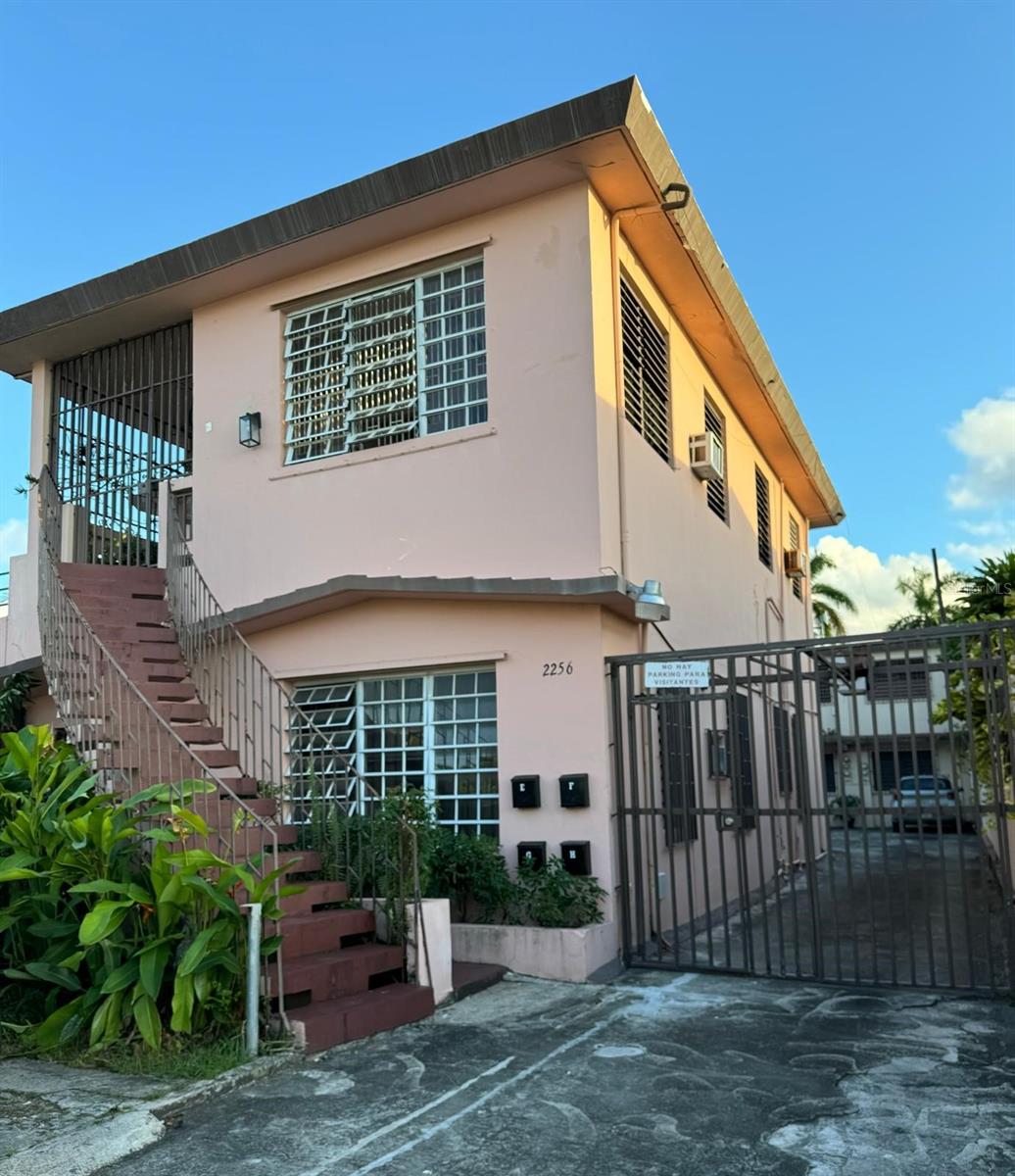
2256 Cacique, San Juan
This active Santa Teresita listing is a nine-unit multifamily property offered at $1.8 million. Its listing describes approximately 6,000 square feet of construction near Ocean Park beach, Condado, Isla Verde, and the airport.

2073 Cacique Street, San Juan
This furnished six-bedroom, eight-bathroom coastal residence is listed at $2.6 million with 3,221 square feet of living area. The active listing highlights a private guest suite, poolside retreat, two-car garage, and proximity to the beach.

9 The Enclave, Dorado
Casa Koi is an active five-bedroom, six-bathroom Dorado Beach residence listed at $10.4 million with 5,270 square feet of air-conditioned living space. The listing describes a heated saltwater lap pool, koi pond, four-car garage, backup generator, water cistern, and home automation.
Conclusion
TPS and DACA recipients can generally take a wholly domestic trip to Puerto Rico, but current documents and the traveler’s individual immigration history still matter. International connections or side trips require a separate authorization analysis, and people with removal orders or other complications should seek legal advice before departure. Act 60 and Puerto Rico tax residency rules do not create immigration status or travel permission.
Explore Puerto Rico luxury properties that may fit your relocation plans. Contact Christie’s International Real Estate Puerto Rico for local property guidance, and coordinate immigration and tax decisions with your licensed advisers.
FAQs
Can I Travel to Puerto Rico With TPS?
A direct trip from another U.S. jurisdiction to Puerto Rico is ordinarily domestic, so Form I-512T is generally not required for that itinerary. Carry current identification and TPS evidence, and obtain legal advice if your case includes a removal order, expired documents, or other complications.
Can DACA Recipients Travel to Puerto Rico?
People with current DACA can generally fly directly to Puerto Rico without advance parole because the trip remains within the United States. Use a wholly domestic itinerary and carry current TSA-accepted identification and DACA documentation.
Do I Need Advance Parole to Fly to Puerto Rico?
Advance parole is generally not required for a direct domestic flight to Puerto Rico. It may be required for DACA-related travel outside the United States, while TPS beneficiaries use the applicable TPS travel authorization, so review the full itinerary before departure.
Does Act 60 Give Me Immigration Status?
No. Act 60 is a Puerto Rico tax program and does not provide a visa, lawful status, employment authorization, or permission to enter the United States.
Related Articles
These guides provide additional context on tax residency, nonresident property ownership, and the Puerto Rico purchase process.